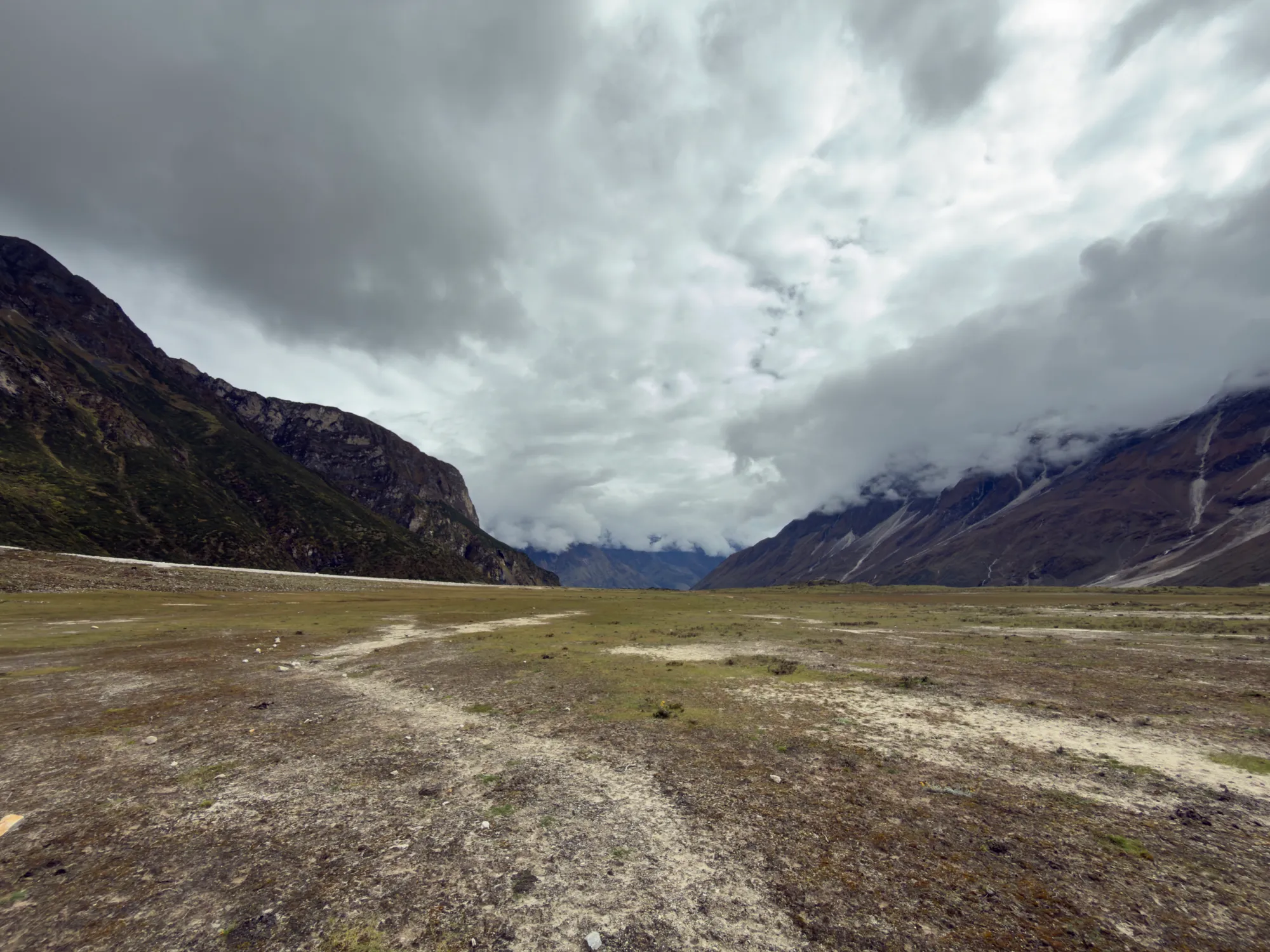
I woke at 4 a.m.—early, as usual—but at least with a decent stretch of sleep behind me. The first order of business was to see if Manaslu would reveal itself. Fresh snow had fallen overnight, but thick clouds clung stubbornly to the ridges. I caught a few teasing glimpses of surrounding peaks, but nothing that conveyed the scale of the mountain itself. Manaslu was keeping her secrets.
From there we set out toward Pungyen Gompa. The back route required us to cross the river, which turned into the day’s first adventure. Heavy rain overnight had taken out some of the wooden bridges. We removed shoes, put things into dry bags as needed, and prepared for the crossing. It was knee-deep and icy—within seconds my feet were numb and my breathing ragged from the shock. We scrambled across, convinced we were in the clear because two stone bridges ahead still looked intact.
We were wrong. Four bridges are needed to cross the river, and while the two stone bridges were intact, the last wooden one was not. This next crossing was worse: fast-flowing, waist-deep, and with the bridges completely gone. My guide and porter salvaged pieces of the bridge downstream, pried them out of the rocks, and rebuilt enough of a span for us to creep across. It took nearly an hour. They helped me through the sketchiest part—kind doesn’t even begin to cover it. After that came some bushwhacking through yak pastures and thorny shrubs. My pants proved their worth; not a single scratch from the thorns.
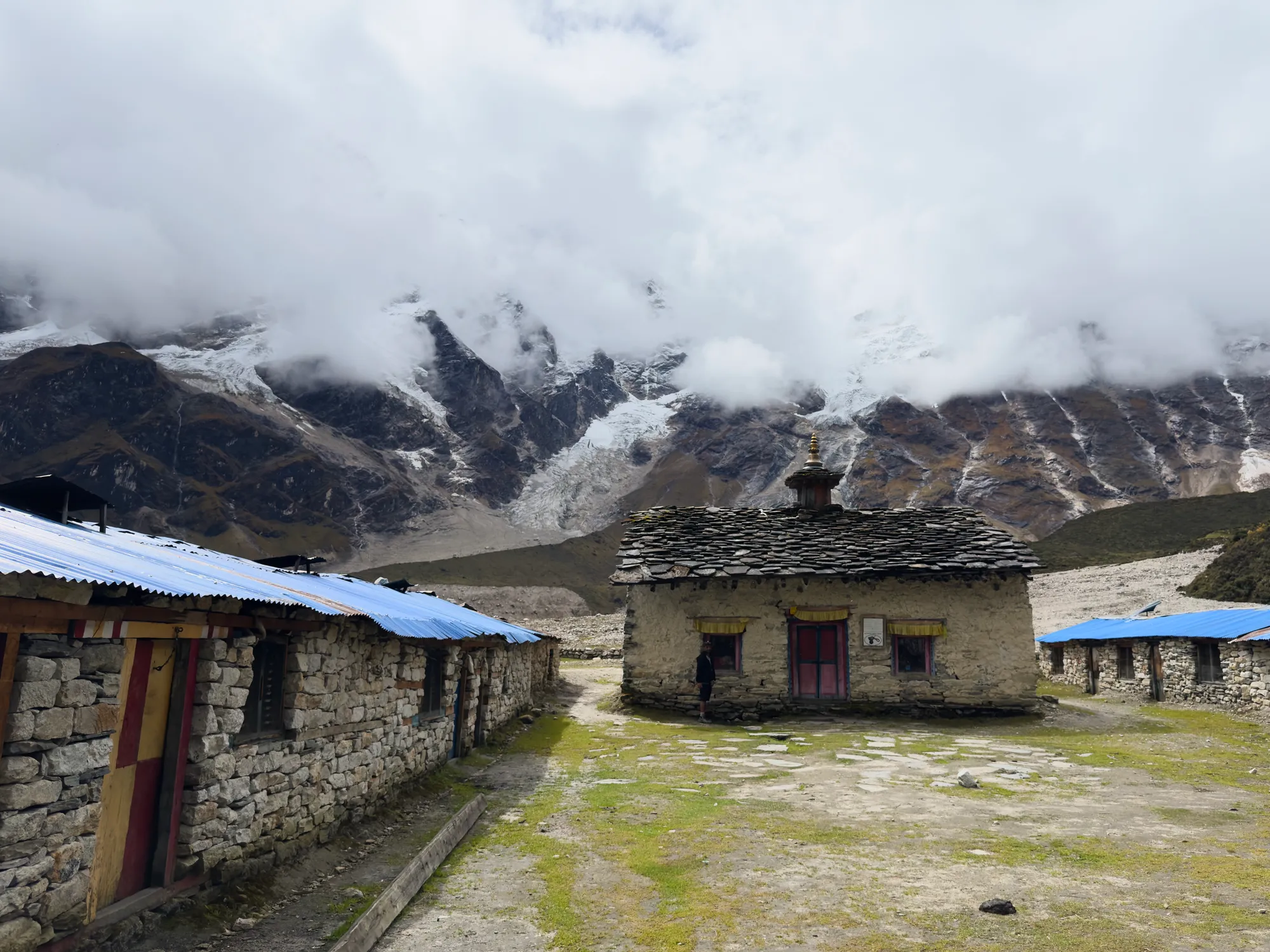
The main monastery building we looked around
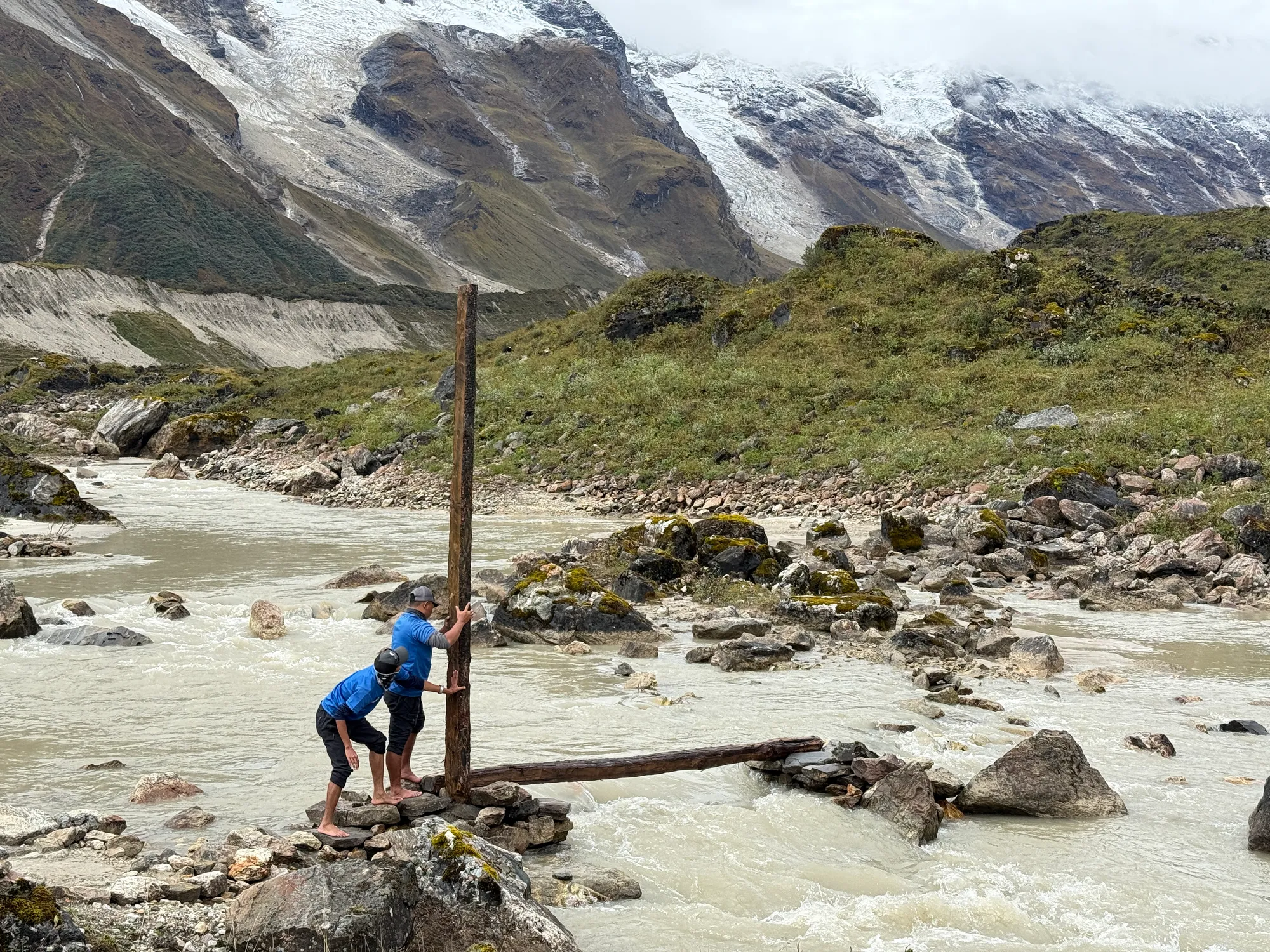
Bridge construction
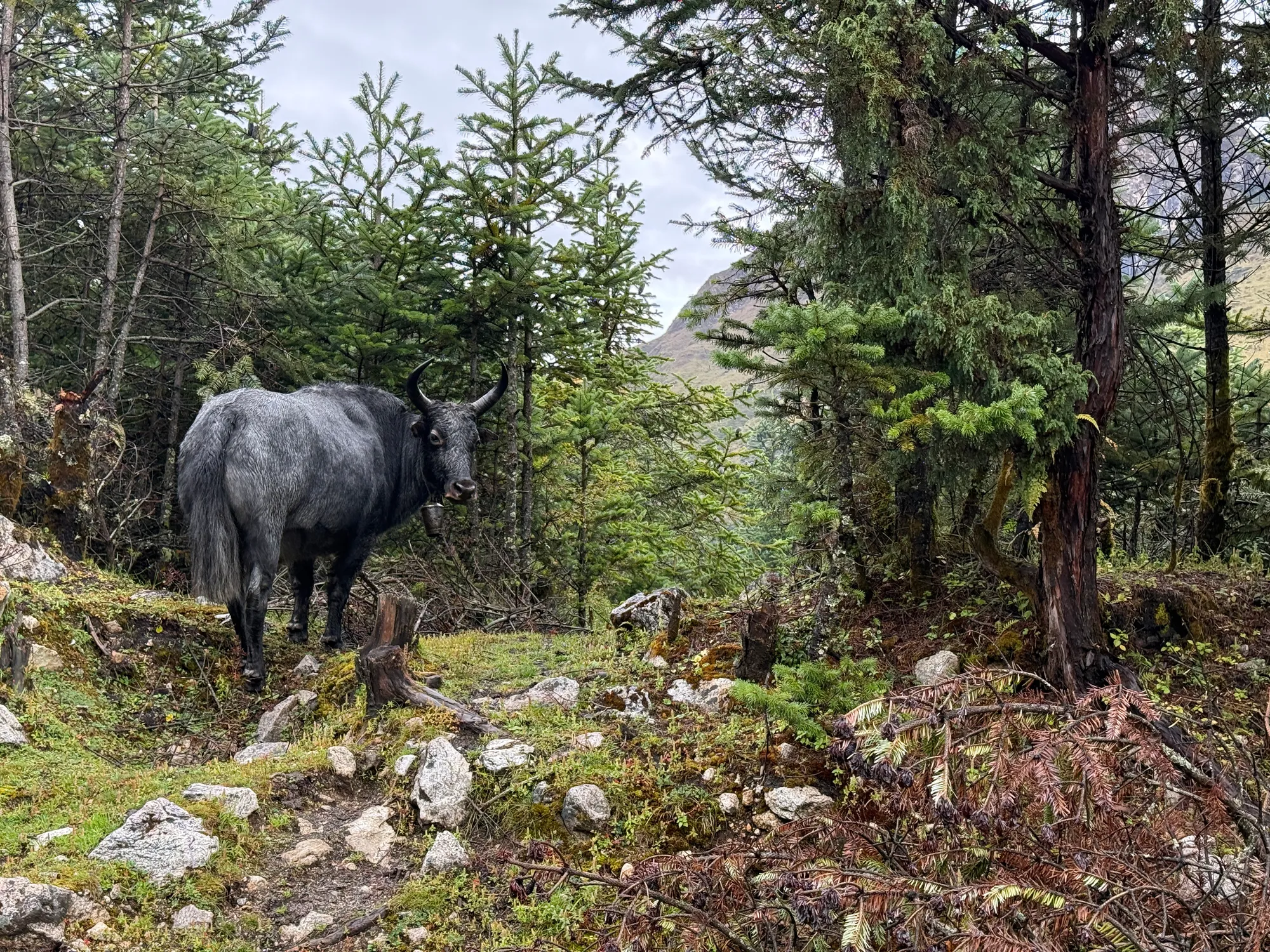
The first Yak we bumped into
The valley opened as we climbed—a wide glacial plain dotted with yaks, a scattering of houses, and a solitary tea house where we’d later stop on the return. At the end stood the Pungyen Gompa monastery, cared for by an elderly man while the monks were away. He let us inside. One of the South Africans joined me; his sister and wife stayed outside—not from prohibition, I think, but because they didn’t want to take their shoes off. We wondered around the tiny structure, soaking up the stillness and the countless depictions of Buddha painted on the wooden walls. Outside, my sunburn worsened despite the SPF 50 sun hoody and SPF 70 sunscreen. The sun up here doesn’t negotiate—it simply burns.
We wandered further across the valley, pausing to watch two avalanches thunder down the slopes. One we saw clearly; the other was only sound and dust. Then we turned back. The descent was punishing—1,600 to 1,700 feet of stairs, most either too shallow for my Nike’s or too tall to take without turning sideways. By the time we crossed two suspension bridges and reached Shyala again, my knees were begging for mercy. We stopped at our tea house from the previous night and wolfed down lunch—dal bhat, what else.
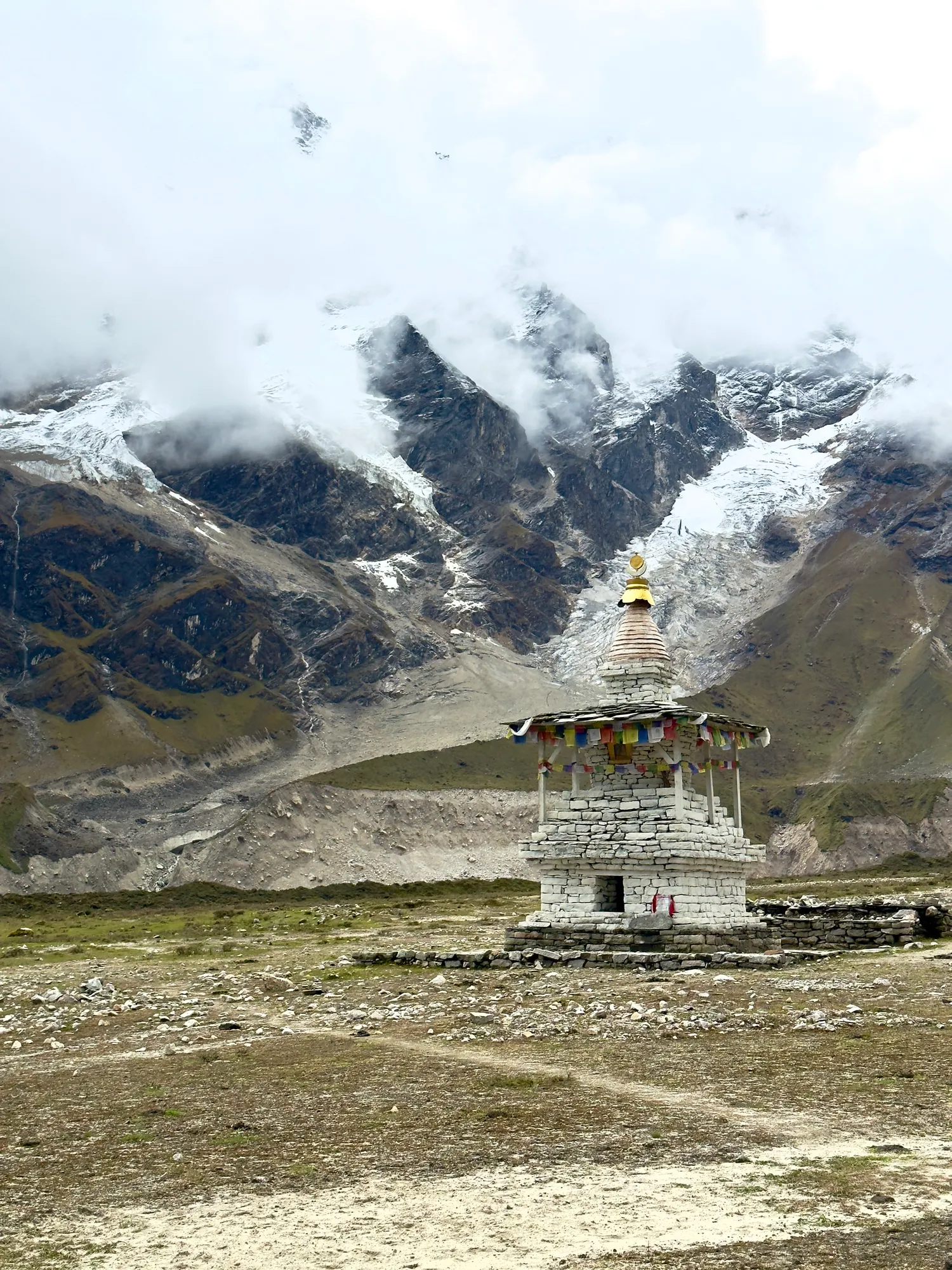
Stupa at the end of the valley
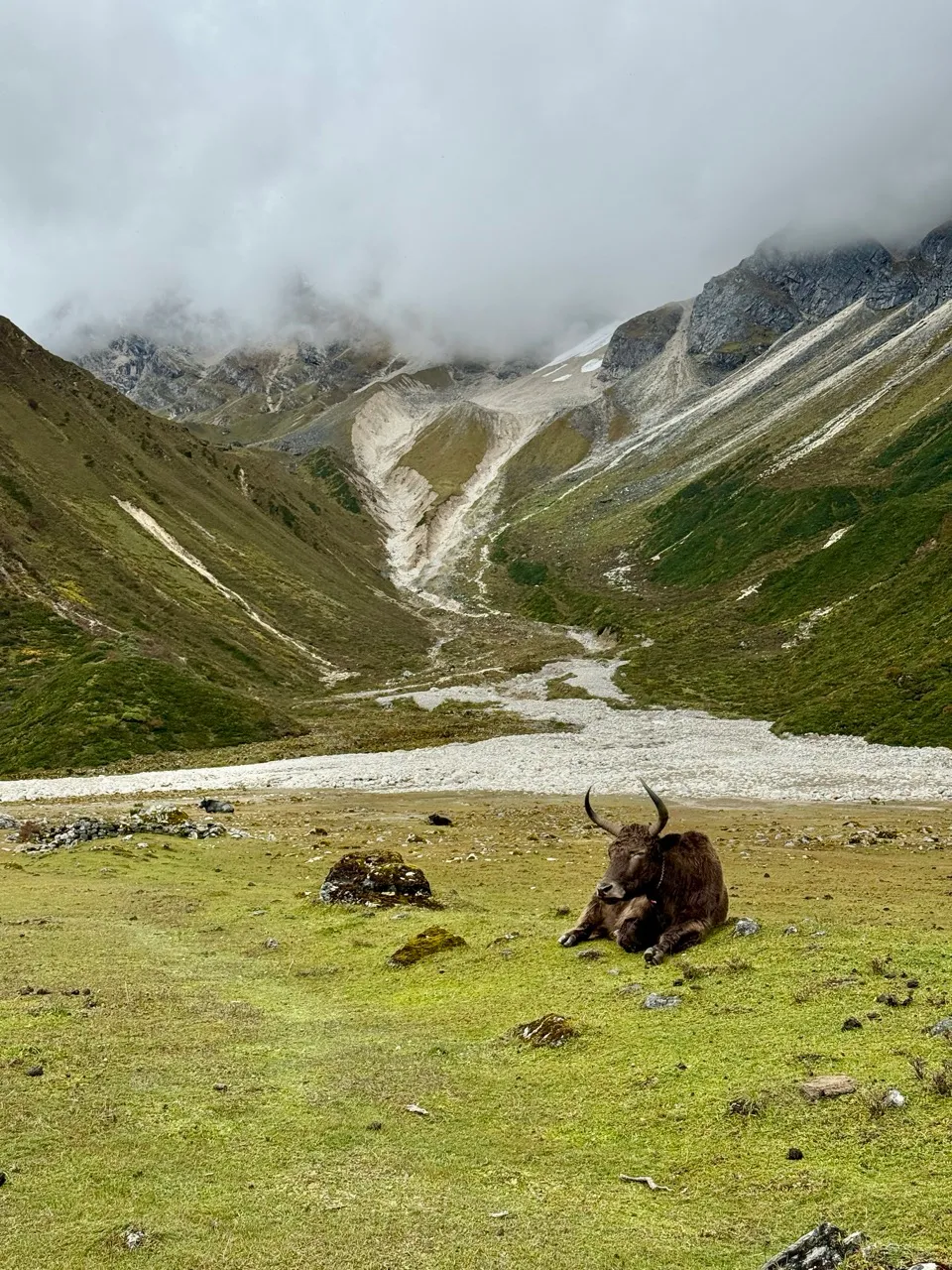
Yak near the gumpa
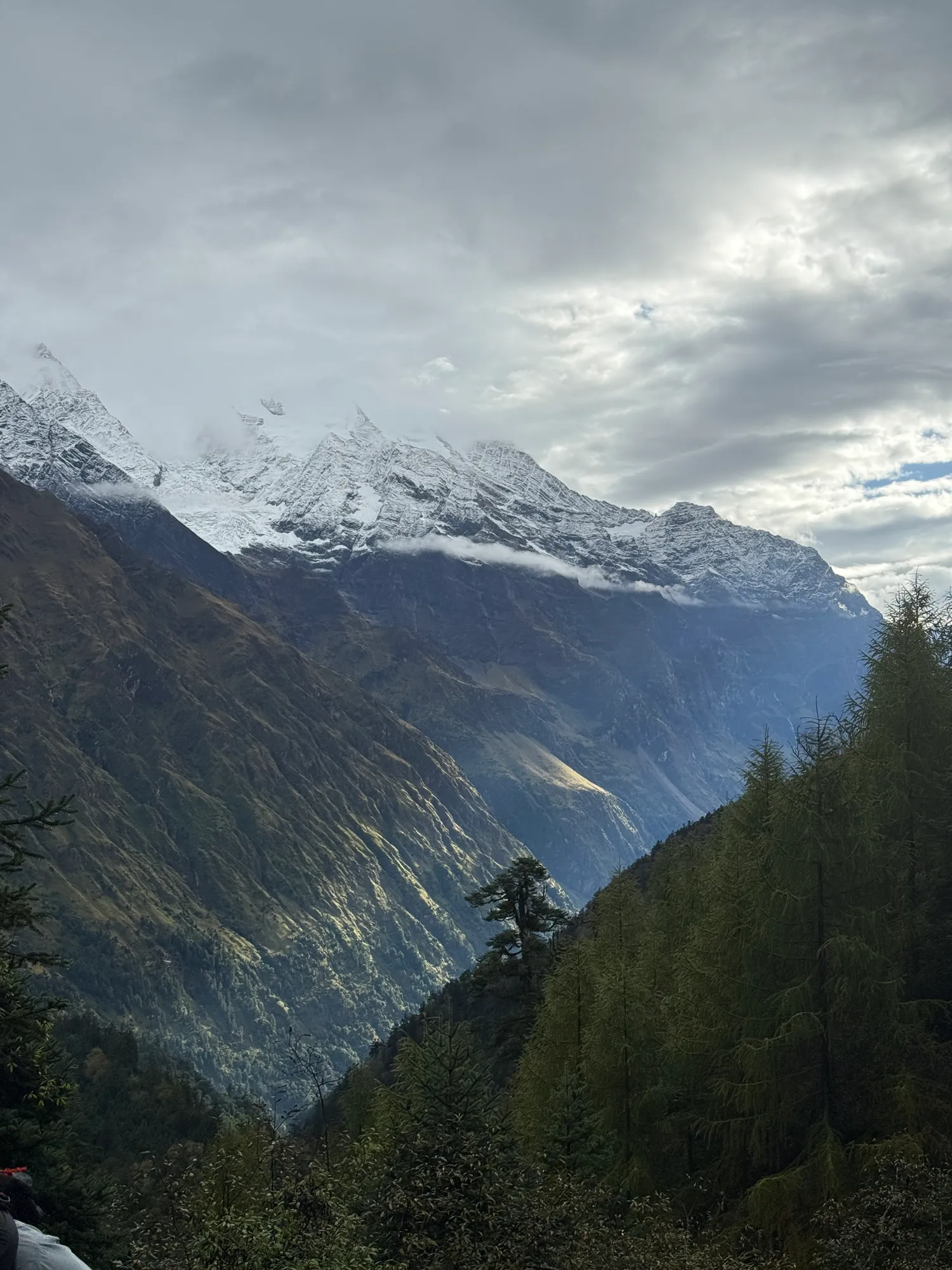
Light catching the valley as we climbed
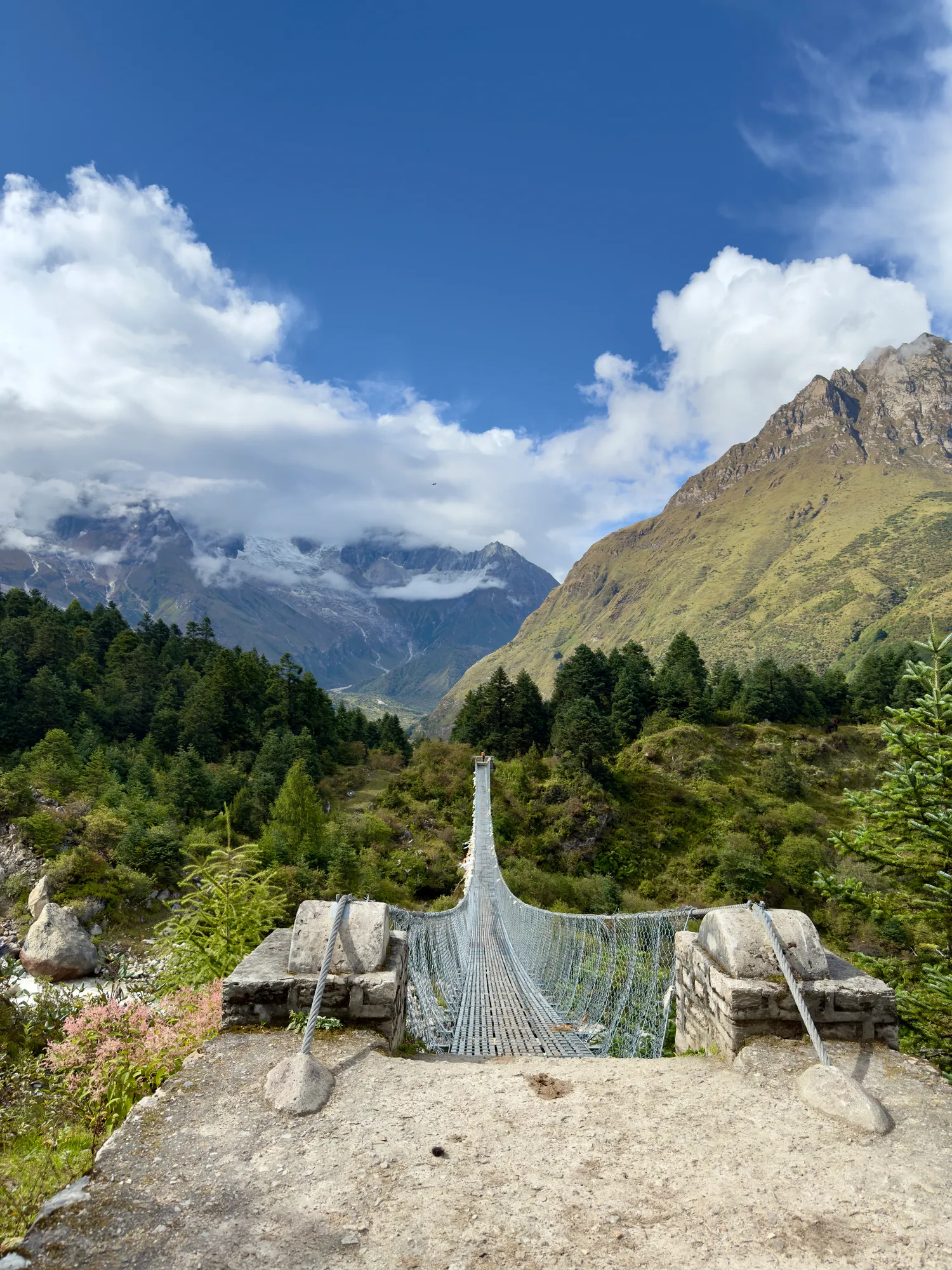
The last suspension bridge
From there it was an hour and twenty minutes’ push to Samagaon. The first half-mile was a brutal 600-foot climb, and we crossed those same suspension bridges for the final time. It felt like saying goodbye to an old companion; from here on, the alpine world takes over.
Samagaon sits at over 11,155 feet, and the Joyful Hotel greeted us—new, but basic. The village buzzed with activity: mule trains hauling loads from base camp, and helicopters constantly shuttling in and out. It is the last day of summit season on Manaslu.
We’ll spend two nights here to acclimatize. Tomorrow the plan is Birendra Lake (weather permitting), then a push higher—I plan on pushing a bit higher that yesterday, but I need to ration my energy carefully. Base camp at 16,076 feet is tempting, but I doubt I have the reserves if we’re climbing every day afterward. Every day until pass day we will be hiking to over 13,123 feet (and sleeping lower on most days) to help acclimatize.
Health-wise, I’m okay, though the sun rash on my hands and neck is painful—stinging, itching, irritating. I may try Zyrtec or ibuprofen to calm it down. Blood oxygen was 89%, not ideal but acceptable. The sun, though—that’s the real adversary up here.
I unpacked, since we’ll stay two nights. By 7 p.m. I was exhausted, debating whether I could stay awake another hour. Likely not. If I fall asleep now, I’ll be awake before dawn. No surprise there.
The main hike is below; you can see the lower section where we crossed the river on the way to the gompa: