The alarm went off at 3 a.m. The first challenge of the day was not the mountain, but an Asian toilet in the pitch dark. Enough said.
We left camp at 4 a.m. in light drizzle. Within minutes I twisted my right ankle—not badly, but enough to make me nervous given what was ahead. My porter, astonishingly, had no headlamp and declined the spare I offered. He carried on in the dark, guided only by the faint glow of snow underfoot. I still don’t know how he managed it.
Snow lined the path, so headlamps were only necessary until about half an hour before sunrise. By then we were walking in heavy mist, unaware we were in a valley surrounded by 6,000-meter peaks. When the clouds finally lifted, the tops of the mountains appeared—first faintly, then fully—and the whole group erupted. Whoops, cheers, even tears. Soon more mist burned away, and suddenly the vast walls of those mountains were right beside us. The base of one peak was no more than a five-minute walk away. It was an emotional, almost overwhelming moment.
The pass was still hours away, and every step was harder as we climbed toward 5,000 meters. Oxygen thinned, pace slowed. At one point I choked on a swallowed crane fly—a ridiculous but memorable way to be reminded of my lungs’ limits.
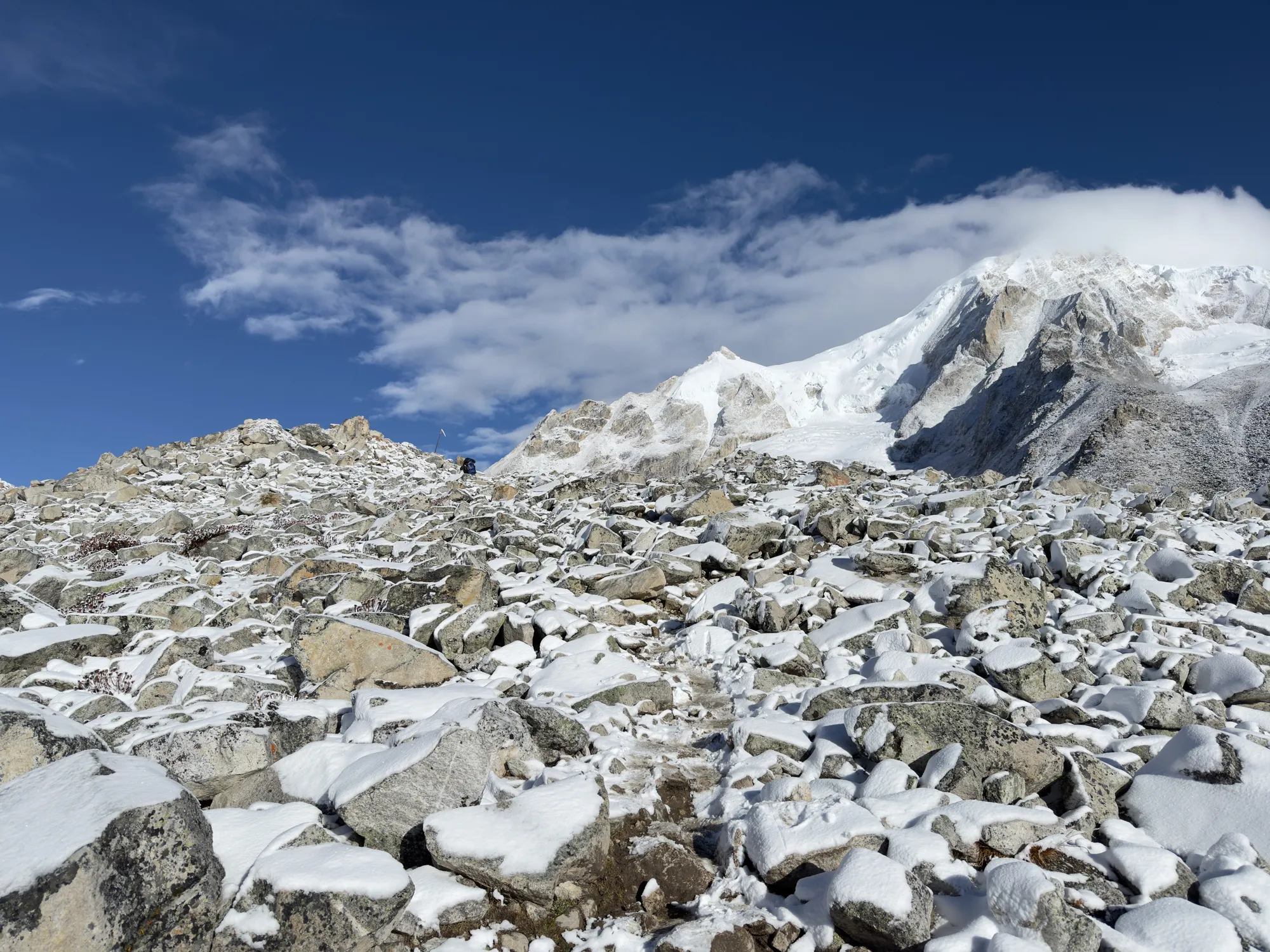
At 4,600 meters snow was all around us, though the path was still clear. By 4,900 we were walking on fresh snow, and by 5,000 the trail had turned to ice. Every step demanded care. A woman in our group, traveling on horseback with altitude sickness, tried to walk but couldn’t manage in the thin air. The emotional crescendo came just before the pass itself—cold, wind, altitude, and anticipation all colliding.
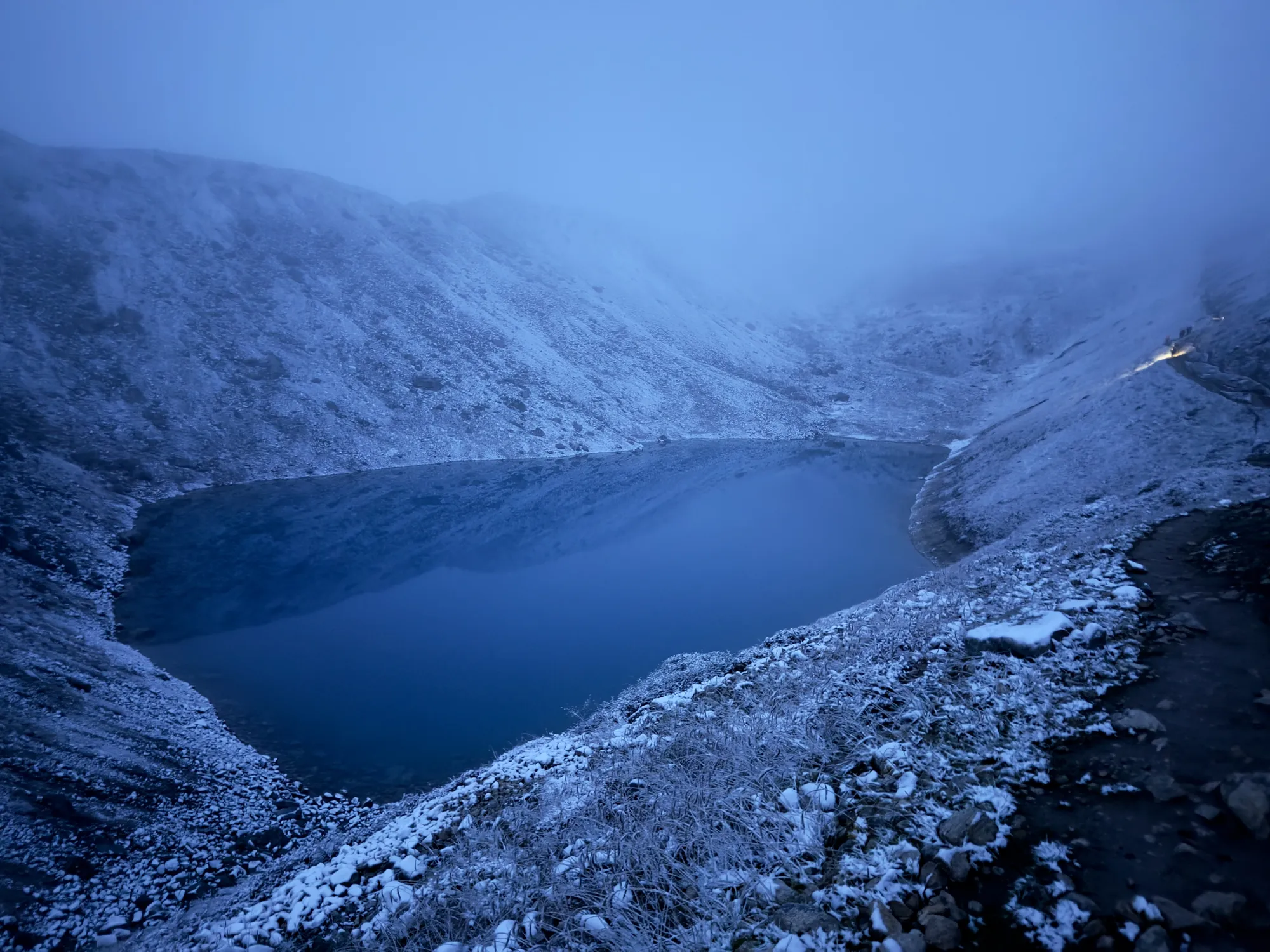
A lake on our path about 20 minutes before sunrise
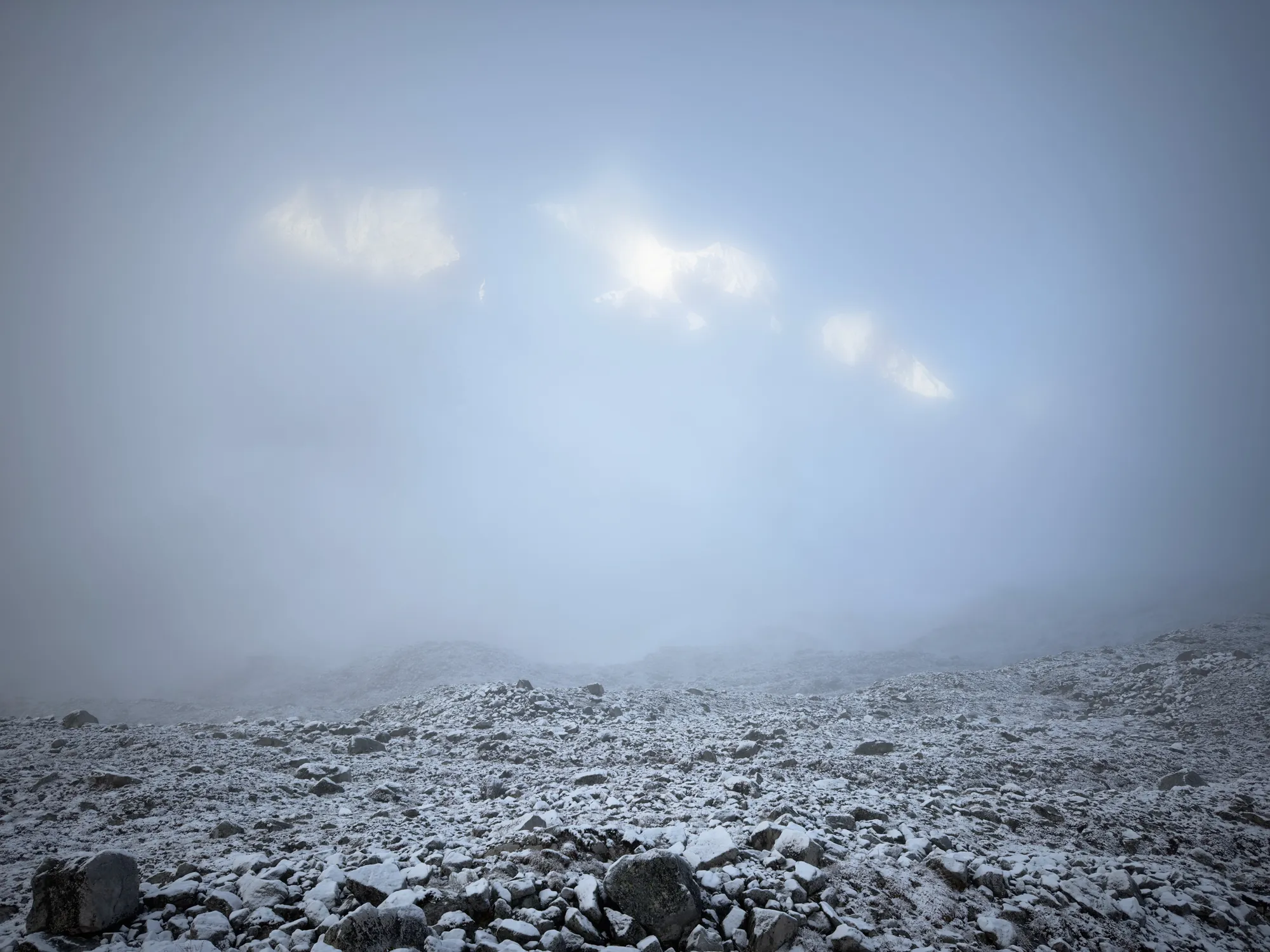
A surprise 6km high mountain appears in the mist
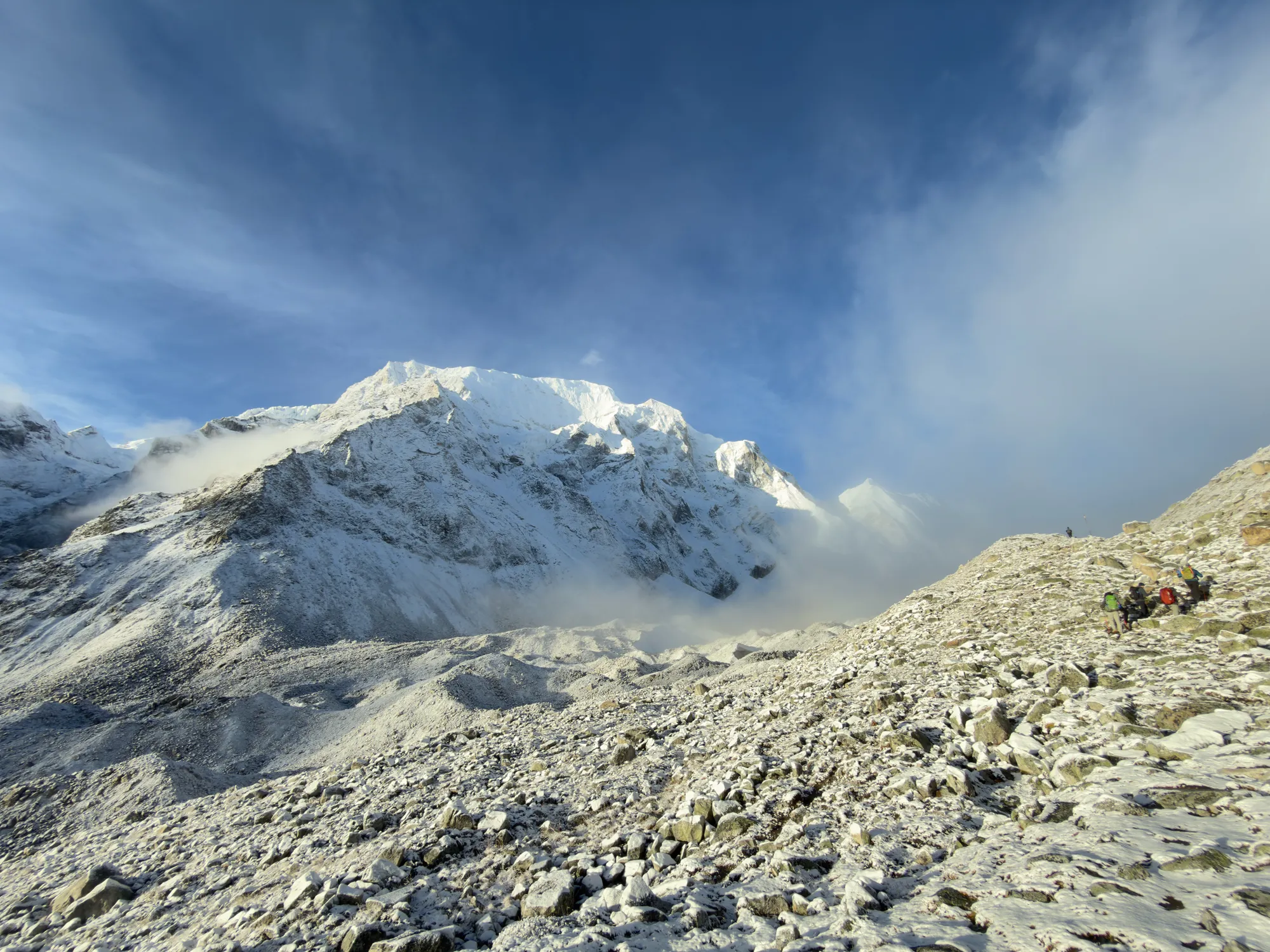
Mist lifts to reveal its nearby
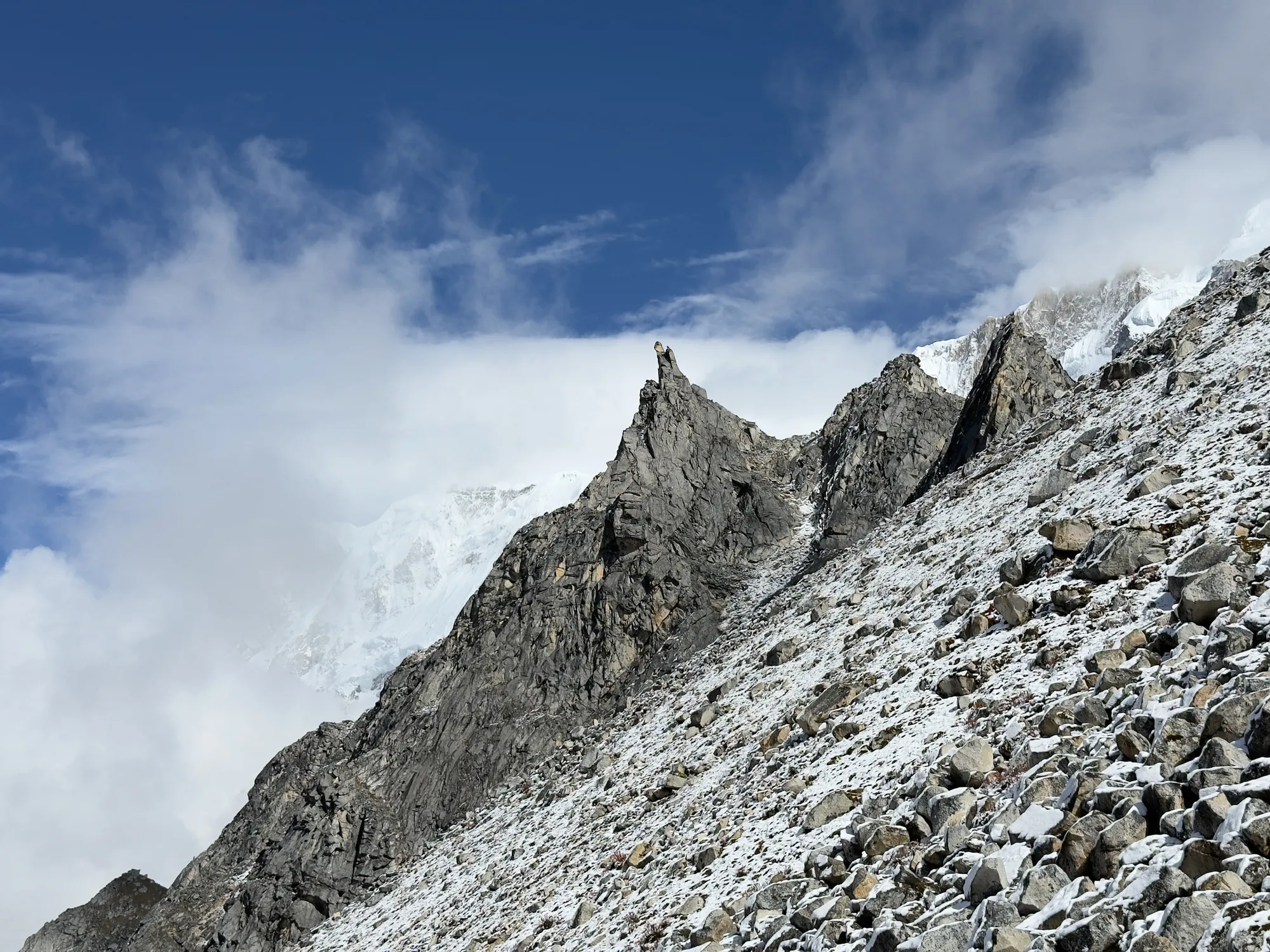
Rugged peaks near the Larkya La
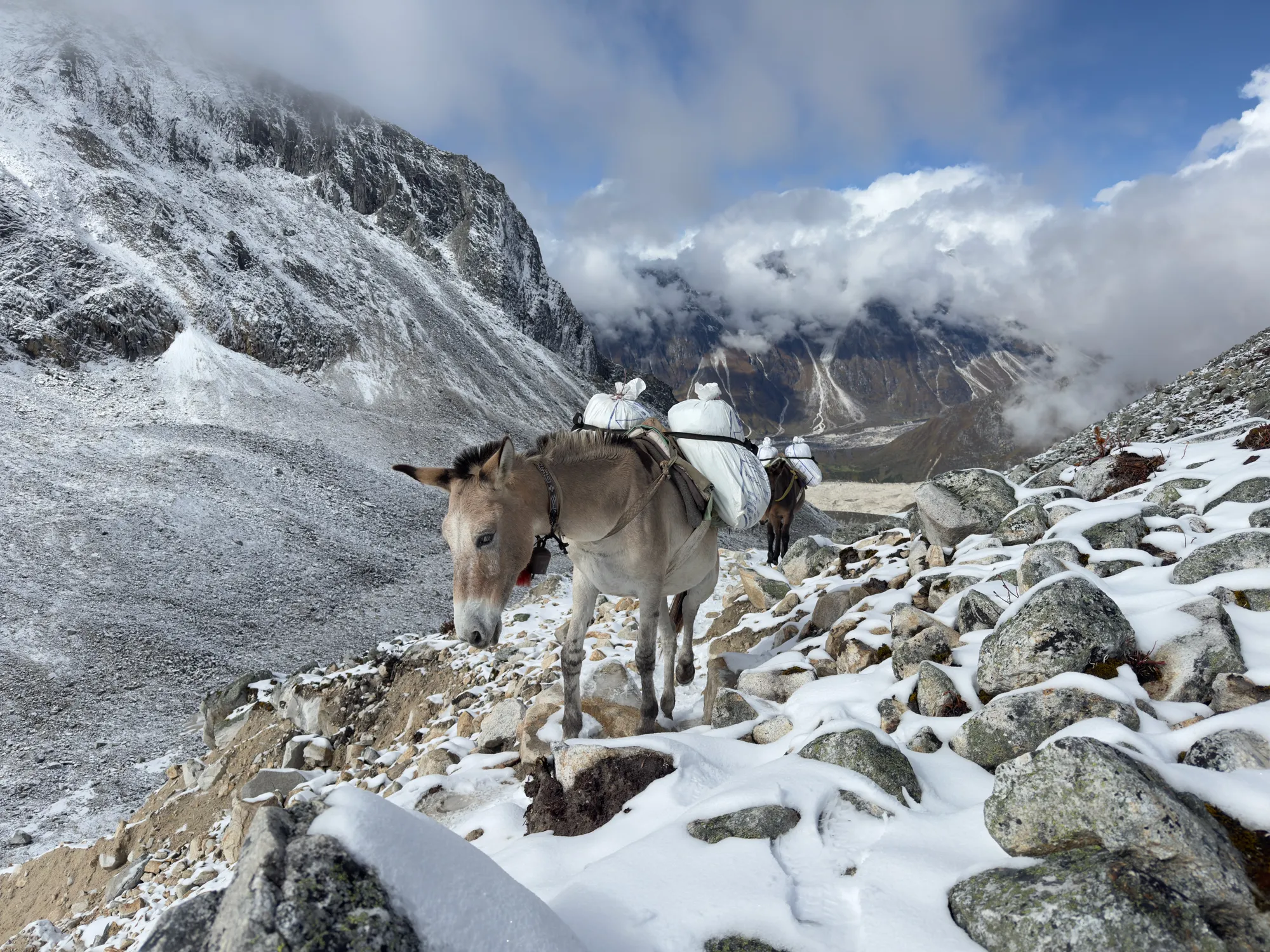
Contrary to expectations, mules were at the peak
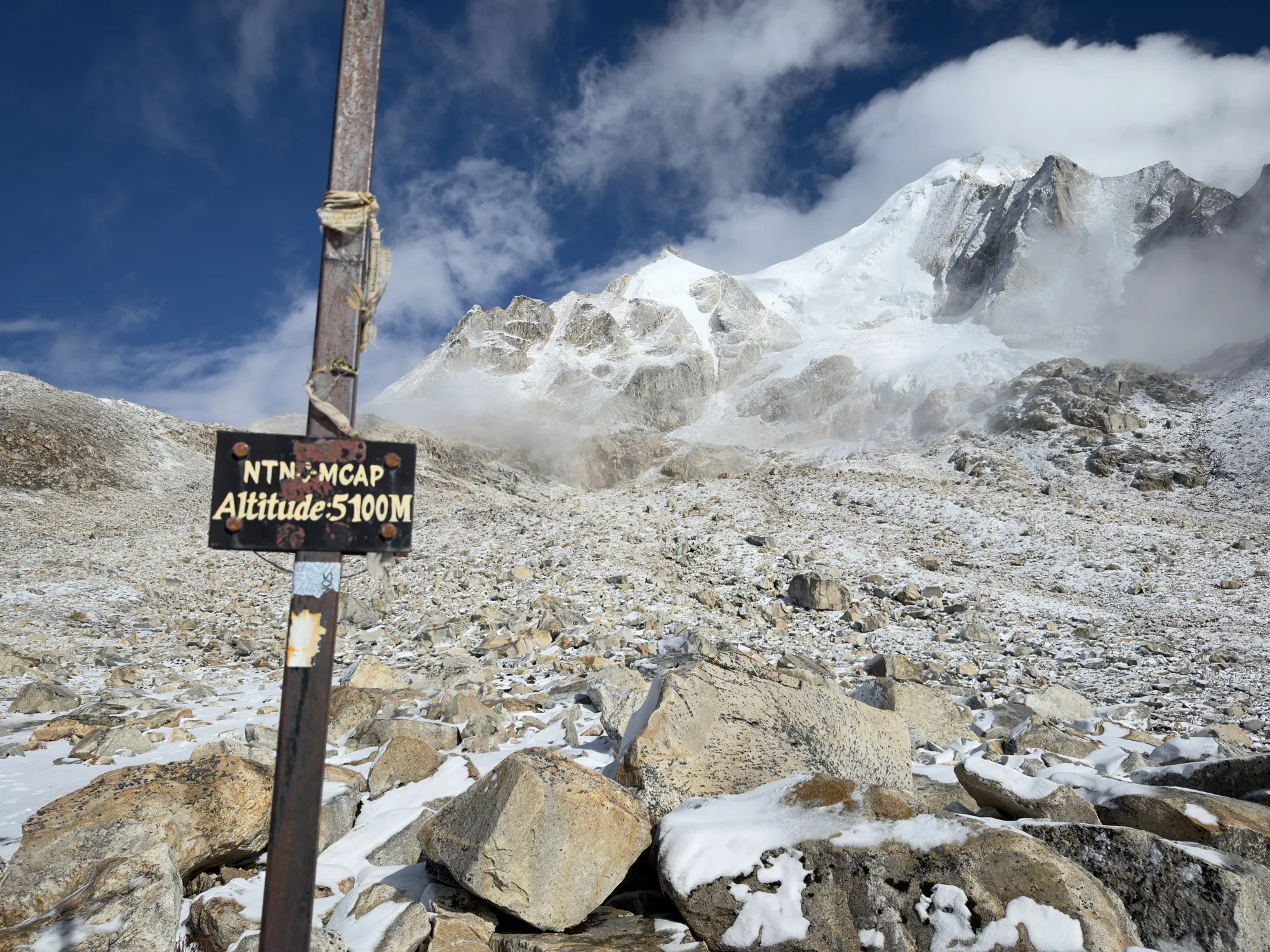
5100m sign
Reaching the pass was brutal. Temperatures hovered around –1°C, but with windchill it felt closer to –10°C. The snow and ice made footing treacherous, and the lack of oxygen meant I could only spare five minutes at the top. We queued quickly for photos, took in what little we could, and then began the descent.
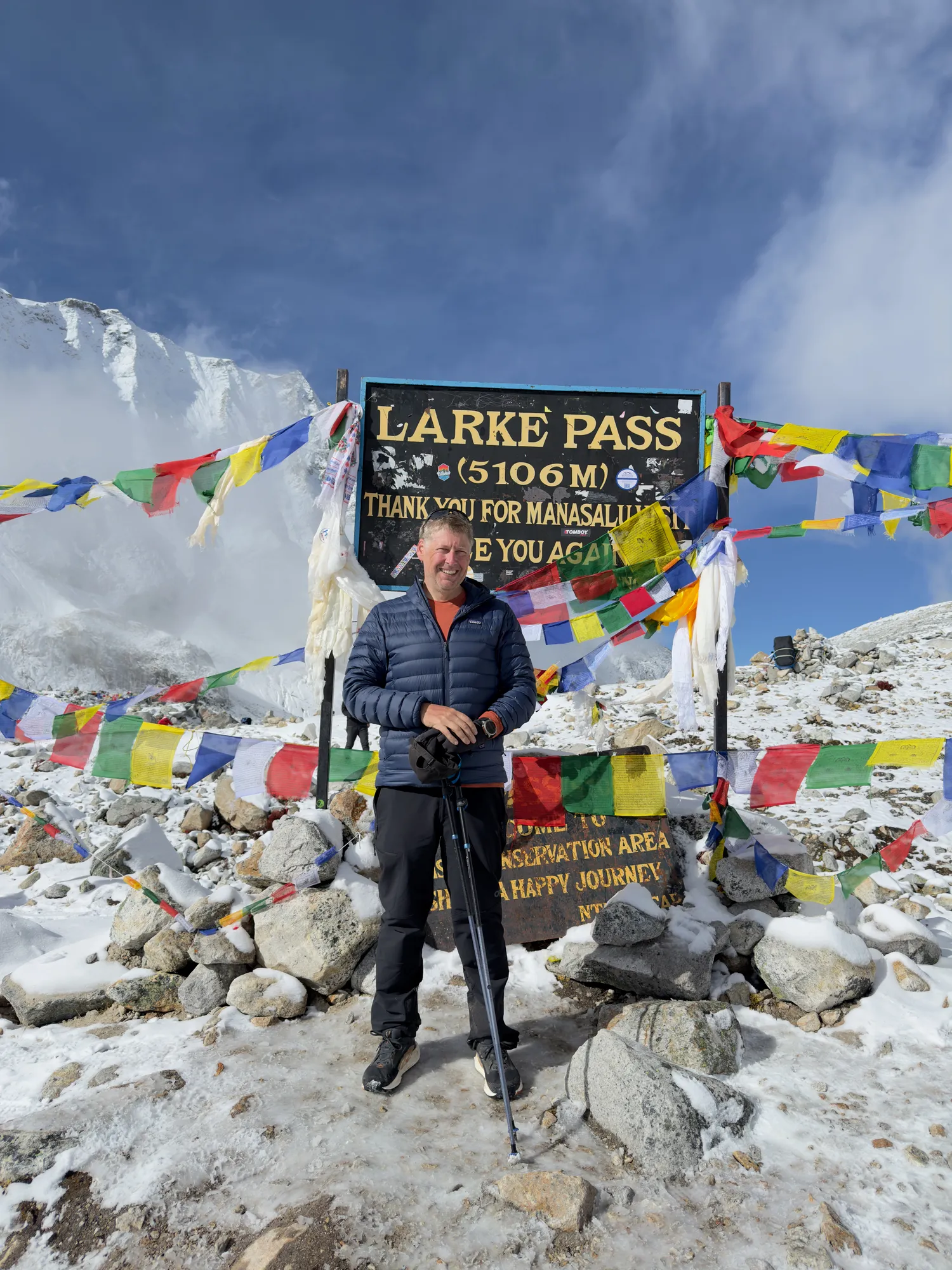
The way down was almost as punishing as the climb. Within a few hours we’d lost nearly 4,921 feet of altitude, stopping for lunch at a teahouse that required us to wade through a shallow river to reach it. The descent was rough—ice, snow, slick rocks. I slipped more than once, trekking poles saving me each time.
As we continued, the terrain changed. The snowfields gave way to desert-like valleys, littered with the remains of ancient glaciers. The scale was vast, the scenery raw and empty.
We reached Bhimtang sometime after lunch. The village sits in a wide bowl surrounded by mountains, stark and exposed. That night was the coldest yet—about 4°C inside the room. Thin blankets, thin air, and tired legs, but the pass was behind us.
It had been a long, brutal, completely unforgettable day.
It’s worth noting that the temperature measured here is from my watch, which was on my wrist under multiple layers of clothing. The actual ambient temperature was lower.
Additionally, at altitude your max heart rate drops dramatically. My usual max is around 194 bpm (well above where it should be for my age), but at altitude it was only about 160 bpm. So while my heart rate data is interesting, it’s not directly comparable to sea level data.