Schedule update: bad weather and landslides are reshaping our plans. Instead of two nights in Samdo, with the climb to the Tibetan border, we’ll only spend one night and push on to Dharamsala a day early. A storm is inbound, and waiting risks making the pass impassable. On the other side, the journey back to Kathmandu will now take two full days instead of a nine-hour drive, thanks to a landslide that has wiped out part of the road. We’ll need to make a major detour.
I woke later than usual, around 5:30 a.m. By the time my watch told me I’d already logged eight hours of sleep, I knew it was pointless to linger. At least the jet lag is finally gone; by the time I have to wake at 3 a.m. for Larke Pass, I’ll be fully adjusted to Nepal time.
I packed my bag into its “lightest possible” configuration, which still ended up weighted with the usual anxieties: spare power banks, extra snacks, rain gear, and a minimal first aid kit. We set out around 7:30 a.m. for the Samagaon monastery, trailed by one of the local dogs. Dogs here are wary but companionable—like our Tibetan Lhasa Apso at home, bred for guarding but mostly wanting to be near people without being bothered by them.
The monastery itself, 450 years old, was similar to Pungyen Gompa yesterday with one striking exception: silk scarves. Hundreds of them. I’ll need to research why—yesterday’s monastery had a sign explicitly banning them, while this one was practically upholstered in silk.
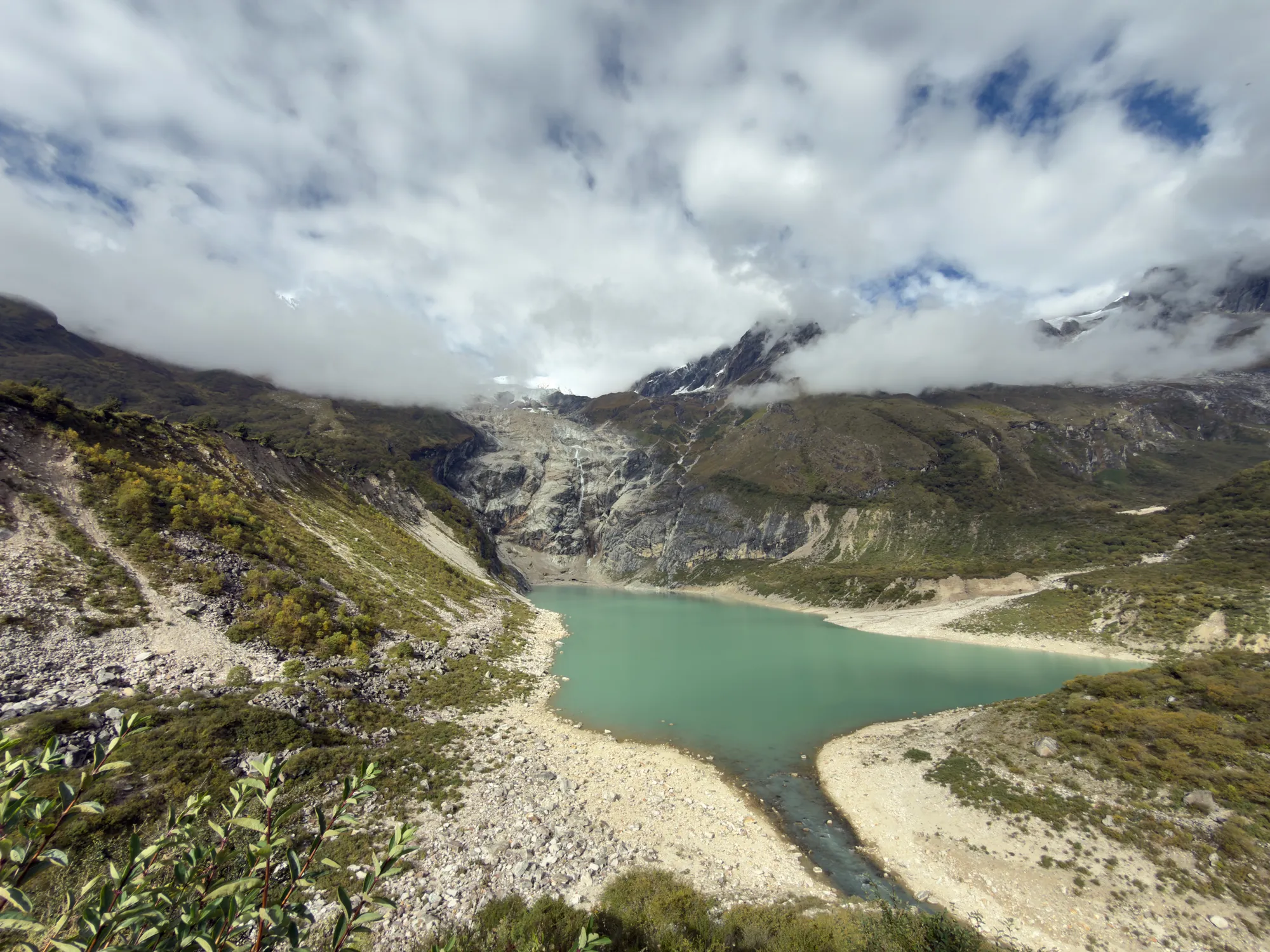
From there we continued up to Birendra Lake, one of the sources of the Budhi Gandaki. Soon we leave the river behind, and this was a fine farewell: a turquoise lake beneath a sheer wall of ice and a waterfall at least a kilometer high. Supposedly the spot gives a perfect view of Manaslu. Supposedly. The mountain has remained stubbornly veiled in cloud, and I may never see it from this side. Our next chance will be after the pass, when the angle changes and the mountain looks completely different. For now, all we could do was admire the lake and listen to the constant crack and boom of avalanches echoing from the upper slopes.
Originally today was meant to be a two-step acclimatization: first the lake, then back for an early lunch before a push up toward base camp. But once we stood at the base of the trail, we all admitted that if we didn’t go straight up, we’d never go.
So up we went.
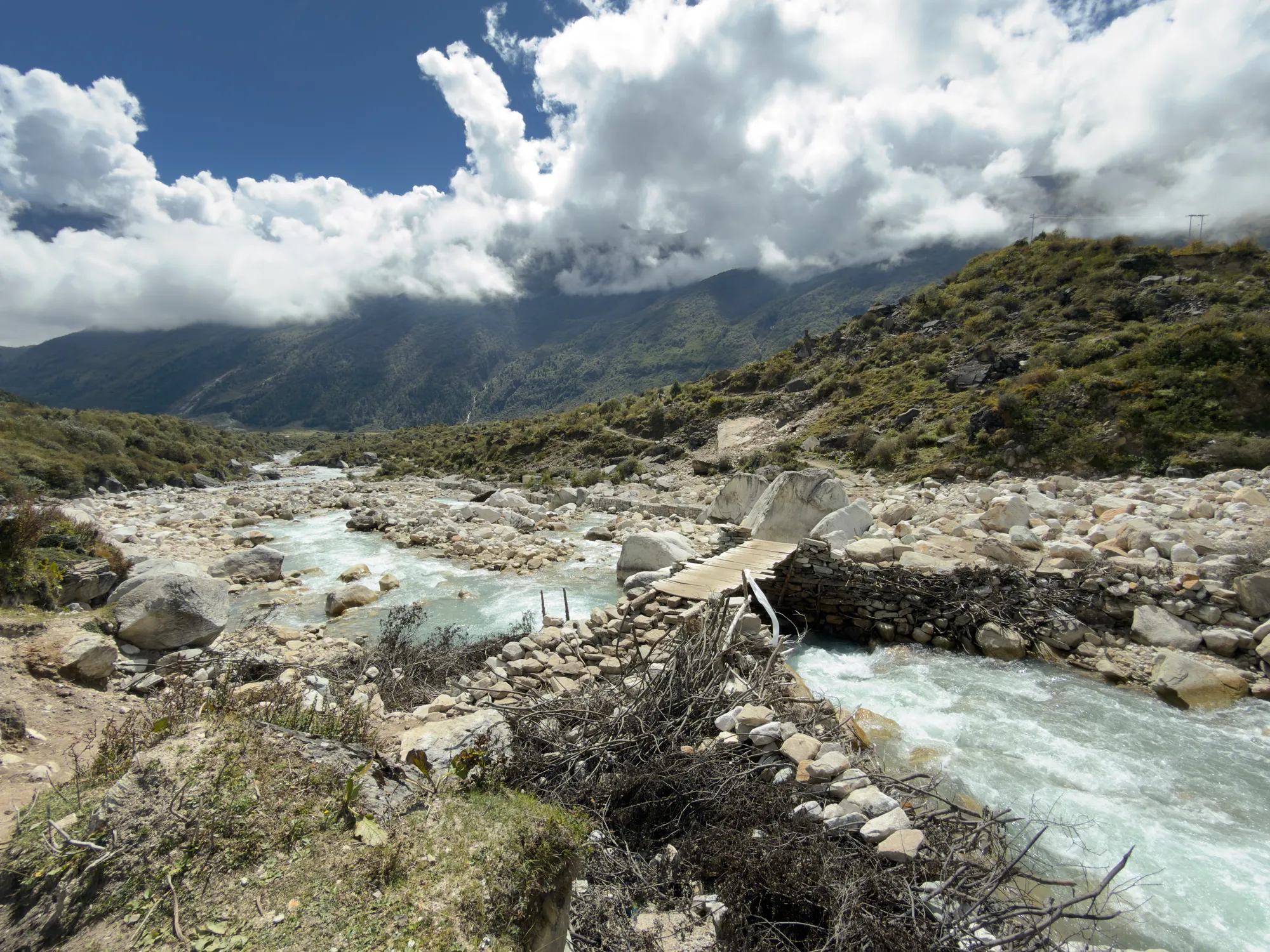
The route began with a rickety wooden bridge—the main path between Samagaon and Samdo, no less—which I checked three times before stepping on. Then came the stairs. There are always more stairs than you expect. For a mile and a half we climbed, most steps mercifully sized just right, while mule and horse trains clattered past, laden with tents and climbing gear for base camp. The air was hot again—30°C at nearly 4,000 meters, which my guide says is wildly unseasonal.
We didn’t make it all the way to base camp. I knew there was no way I could manage that climb and still have legs for the coming days. Instead we stopped around 13,212 feet —about the same height as yesterday—long enough to let our bodies’ chemoreceptors get another taste of thin air.
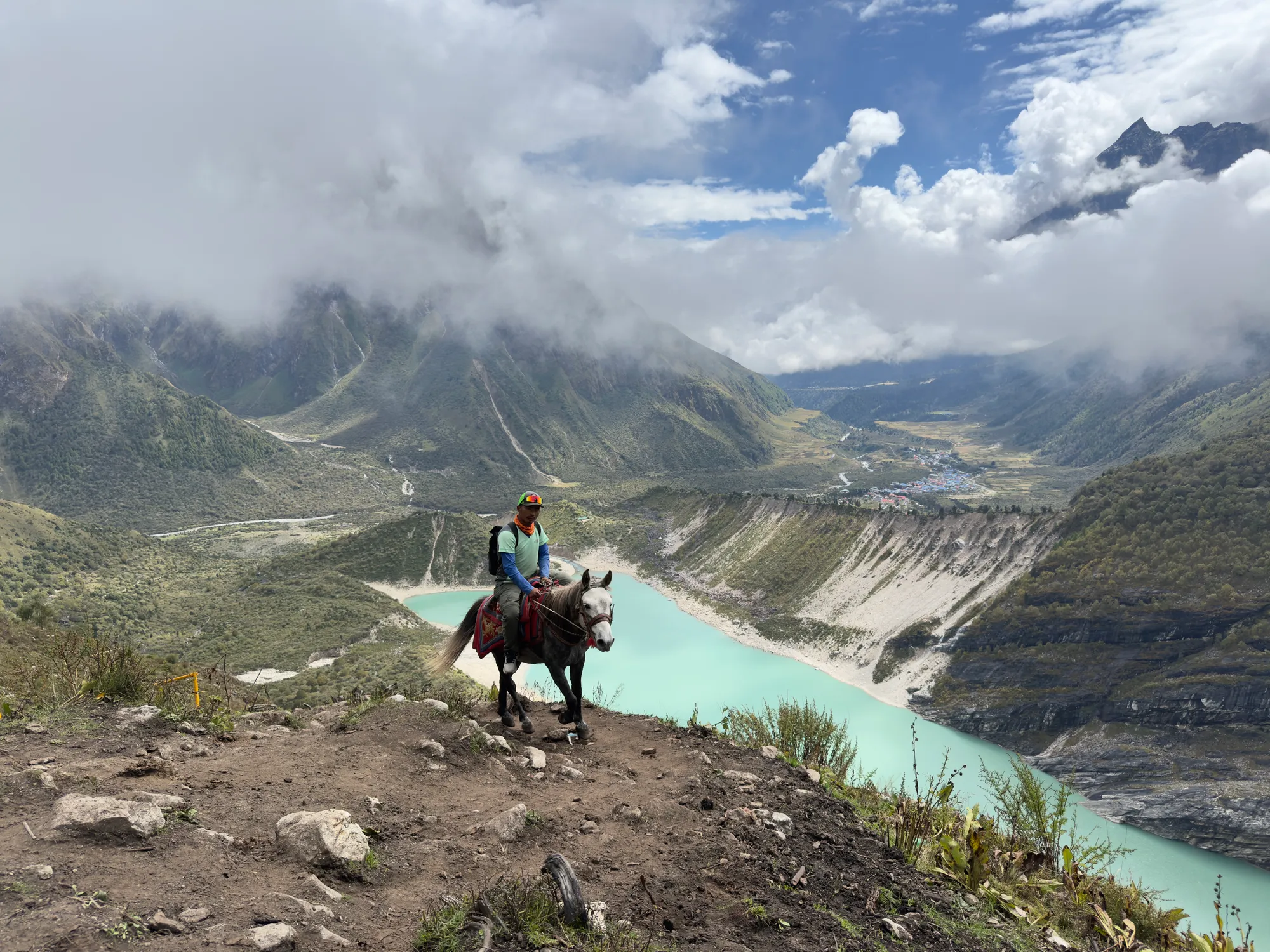
On the way down we met a Sherpa riding up to base camp on horseback, looking every bit the part of a man with serious business. We also passed Chinese climbers fresh from the summit, and one furious German, limping heavily and screaming with every step. He was 19, and had just become the youngest person to summit Manaslu without oxygen. His anger was driven by frostbite on his left foot, and contagious.
Back in town the Wi-Fi, which had been out, suddenly worked again. My own mood, however, was low. I’m struggling to eat enough. At altitude my body rejects food, and the breakfast bars I’d trained on for months are now unpalatable. I’m burning 2,000–3,000 calories more than I eat each day, and it’s starting to show in both energy and morale. So I gave in and declared the Snickers embargo over. Two tiny bars and a Coke disappeared within minutes of my dal bhat lunch—600 calories of glorious sugar and fat. Tomorrow I’ll be spending another $20 on more of them, and I won’t feel guilty about it.
In the afternoon I hung out damp clothes for the first real drying session in days. With rain dogging us on the trail and no chance to hang things from packs, I fear some gear may already be growing mold. But the sun broke through long enough to crisp a few items, even if Manaslu still refused to show herself.
Then came the shower. My guide warned me this was the last usable one before the pass. Technically Samdo offers “hot showers,” but with air temperatures of 3–4°C inside the stone washrooms, it leaves you colder than you can recover from at altitude. So I made the most of it here in Samagaon: a tiny concrete room with holes in the door, just enough heat and just enough water pressure. After two days of grime, it was absolute perfection.
My list of broken apps continues to grow. My photo editor (helpfully made by Apple), has declared me unlicensed and therefore unworthy of editing. Google sign in remains broken, which killed off ChatGPT and Claude for me - so no impromptu lookups of strange customs or mysterious rashes. According to Mayo Clinic - which doesn’t demand a sign in - its probably a sun rash.
The rhythm of Samagaon is its own kind of soundtrack. Early morning, mule caravans march out of town, locals shouting at them for trampling crops or circling stupas the wrong way. Their bells ring in a kind of dissonant carol, like Christmas musicians who never found the same key. Just before sunset the mules return, and the drama restarts. Helicopters thunder overhead from dawn to dusk, sometimes landing in town, sometimes circling before heading to base camp, shaking the fragile buildings as they pass. And then there are the avalanches—frequent, varied, and unnervingly loud. I’d only ever seen one or two in Iceland before. Here they are frequent - sometimes twice and hour. Some are small, and one was so massive the locals themselves rush outside to watch. I’m not sure whether their concern reassured me or made me more nervous. Perhaps ignorance really was bliss.
One unexpected change after heading part way to Manaslu Camp: my SpO2 has been consistently higher since returning: before it averaged 89%, after 94%. Garmin claims I am acclimatized to about 2km above sea level now, roughly half the altitude we visited today.
Tomorrow, the climb continues. Manaslu may or may not appear. The Budhi Gandaki is behind us. The alpine is ahead.