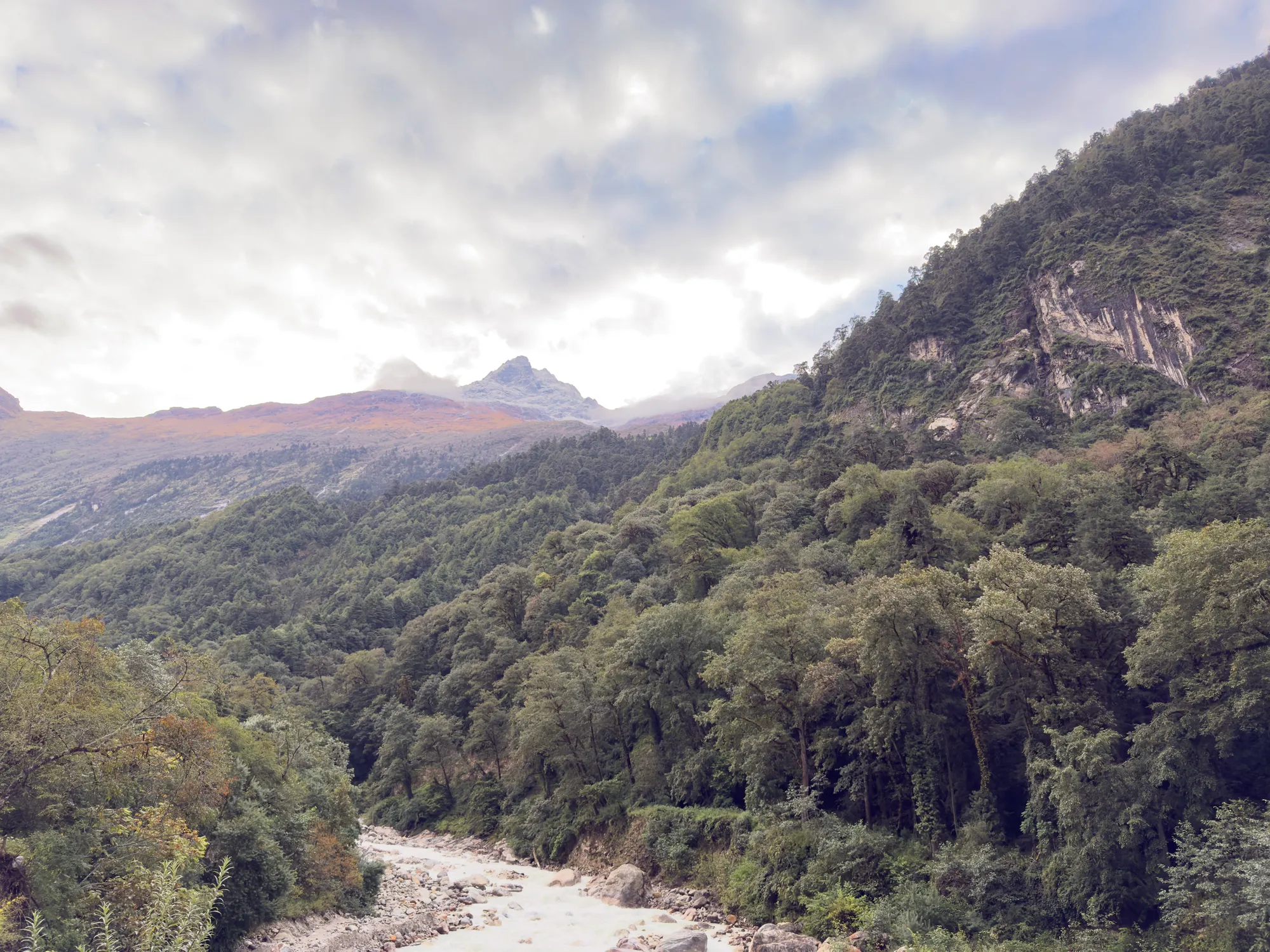
I was up at 4 a.m., as usual. The trek had been one of the most rewarding solo adventures I’ve done in years, but now I was ready to return to my family. I was also dreaming of a clean room, a proper shower, and something—anything—other than dal bhat.
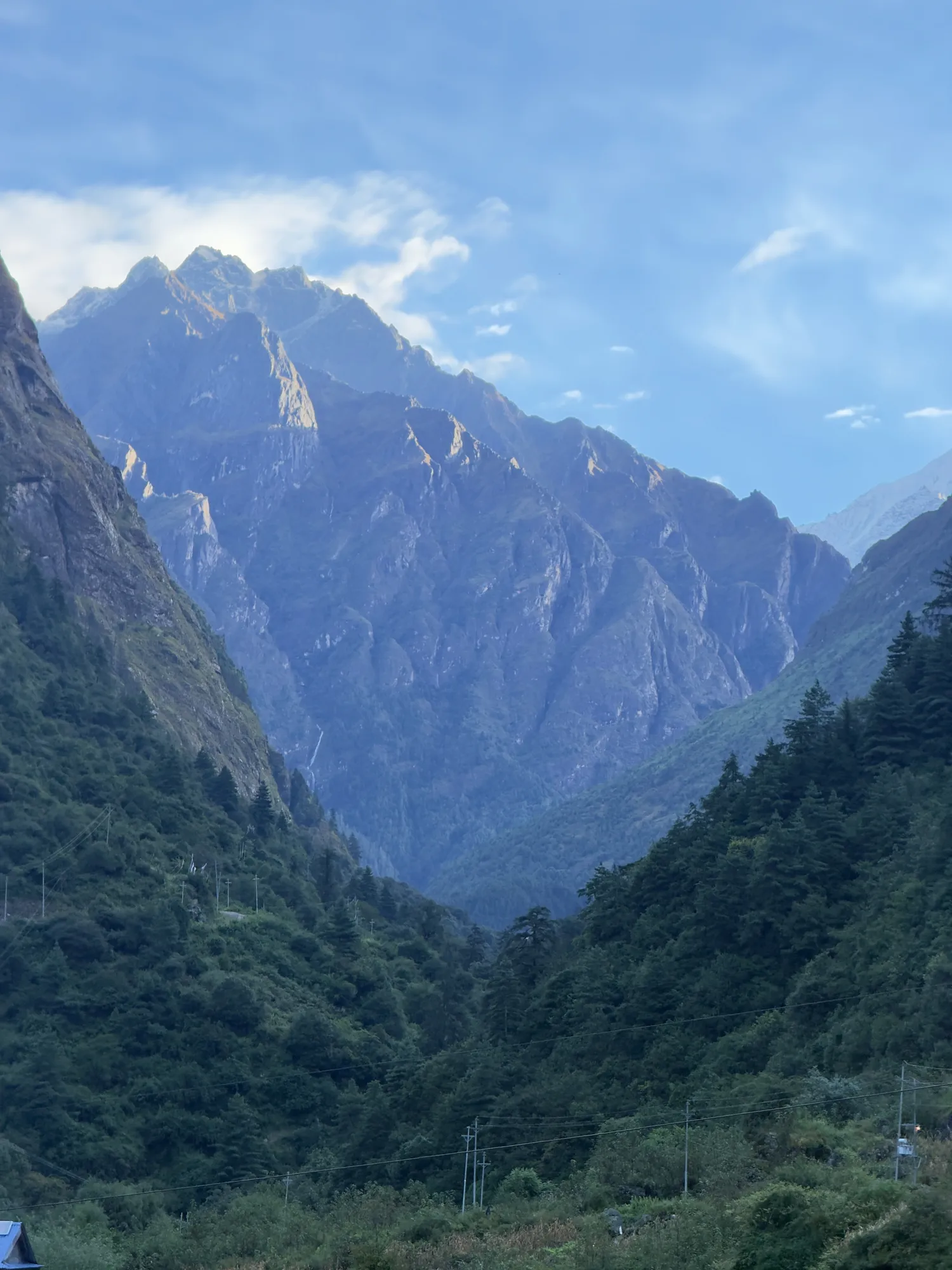
Morning mountain views on the trail
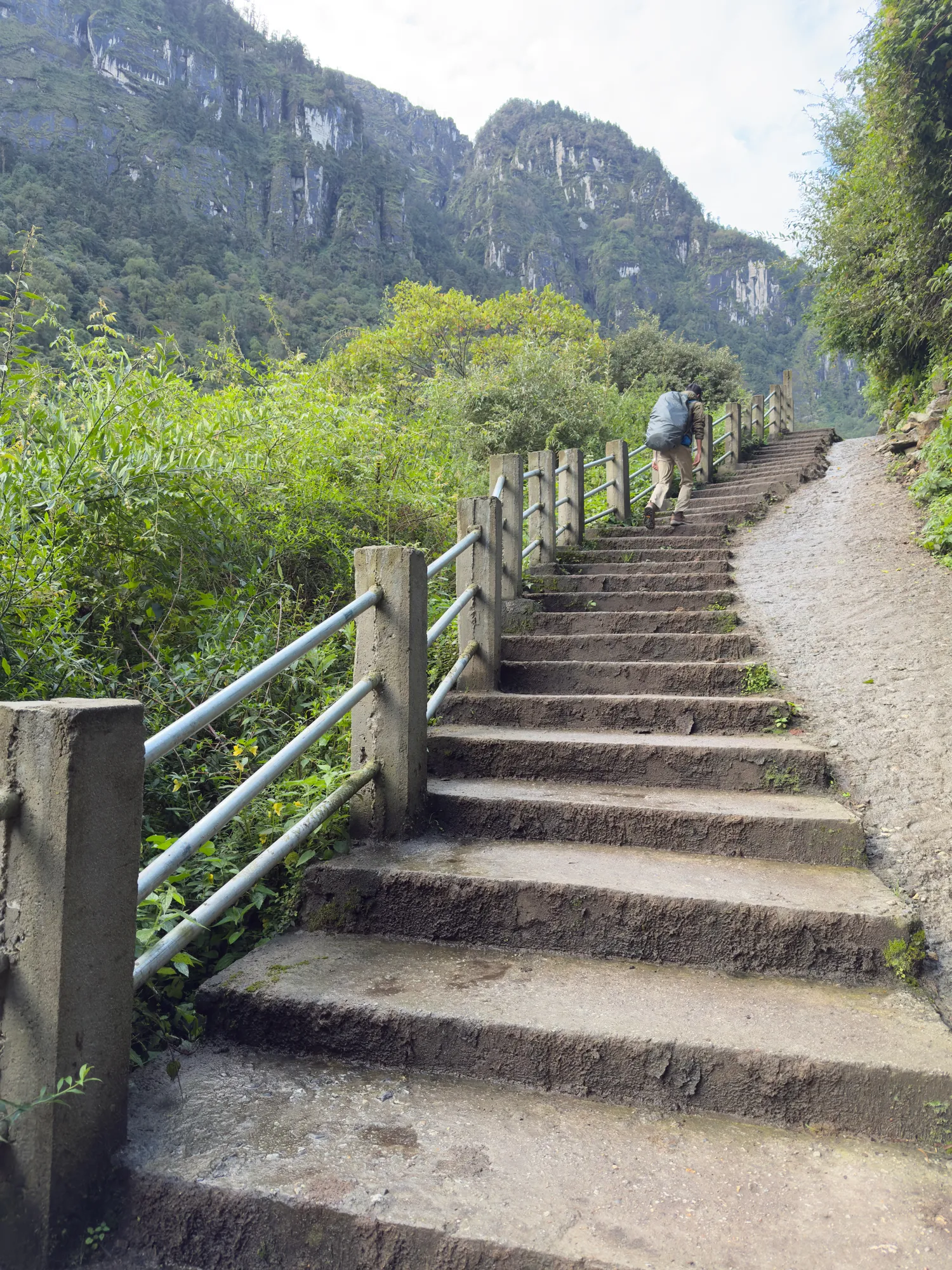
Always more stairs
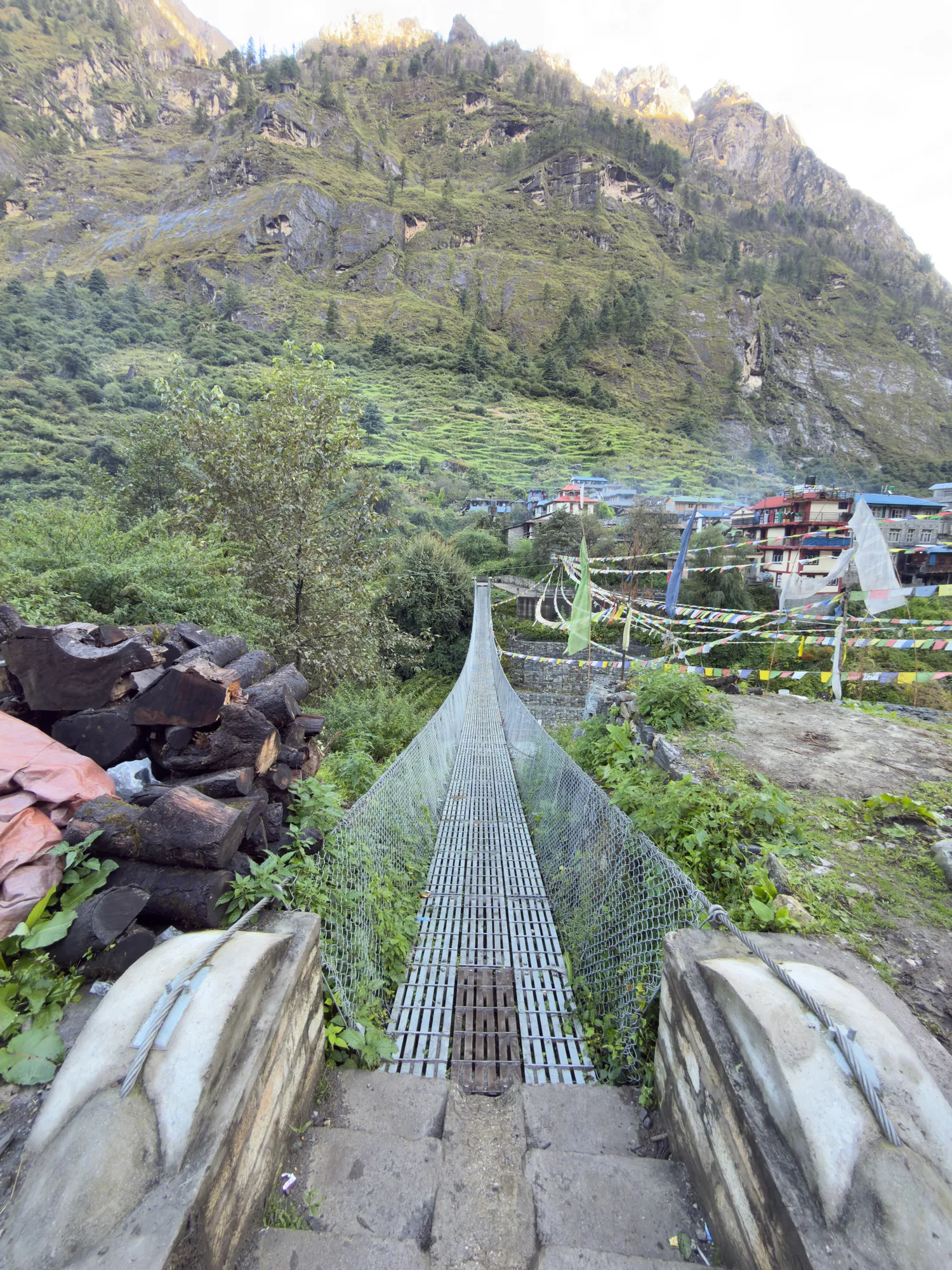
The last suspension bridge
We left Ghoa at 6:15, walking the last four kilometers to Tilje. A dog accompanied us along the way, padding quietly through the mud left by the night’s rain. The trail ended, as it so often does in Nepal, with more stairs—always more stairs—before we entered Tilje itself. The town was heavy with incense smoke, drifting through the alleys in thick clouds, part of the fumigation rituals following what looked like a long night of Dashain festival celebrations. We crossed a final suspension bridge—a fitting farewell to weeks of bridges—before reaching the waiting jeep. It was due in fifteen minutes, so we changed into “road clothes,” lingered in the smoky morning air, and then climbed aboard for the ride down to Besisahar.
The journey was extremely bumpy but uneventful. We wound through villages and terraced fields, the landscape softening as we lost altitude. The road itself was another matter—knee-deep mud, washouts, potholes that could swallow axles—but the Mahindra Bolero didn’t blink. I doubt my American SUV would have survived a single stretch.
As the valley deepened, waterfalls appeared by the dozens. Some were narrow silver threads, others wide sheets tumbling off cliffs, and others roaring torrents that smashed into the river below. We must have passed a hundred of them before the valley finally widened. This section of trail overlaps with part of the Annapurna Circuit, so we shared the road with trekkers heading the opposite way. At a couple of police checkpoints we had to stop and present our permits before continuing, a reminder that even on well-worn routes, movement here is closely monitored.
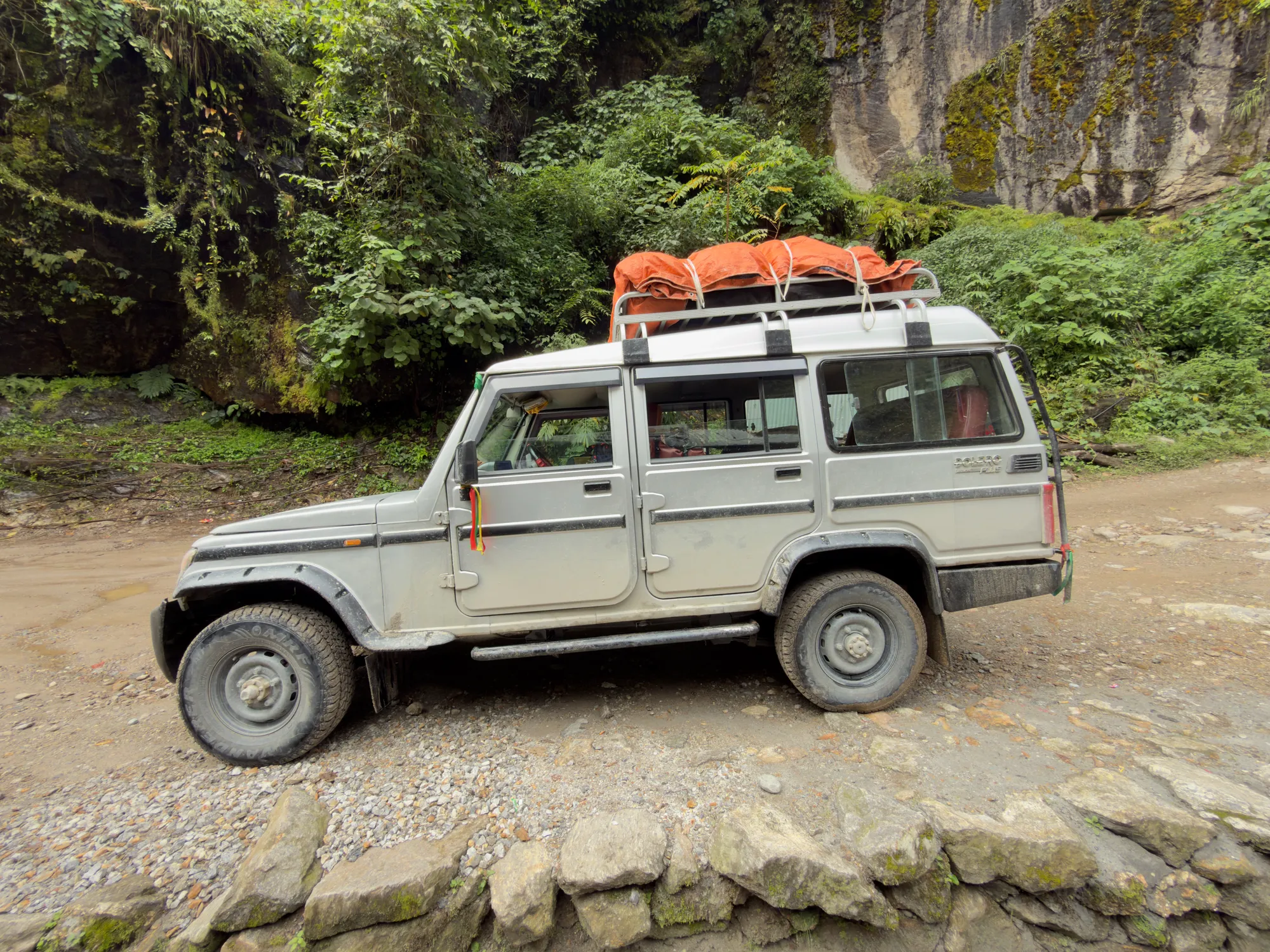
The very capable Mahindra Bolero
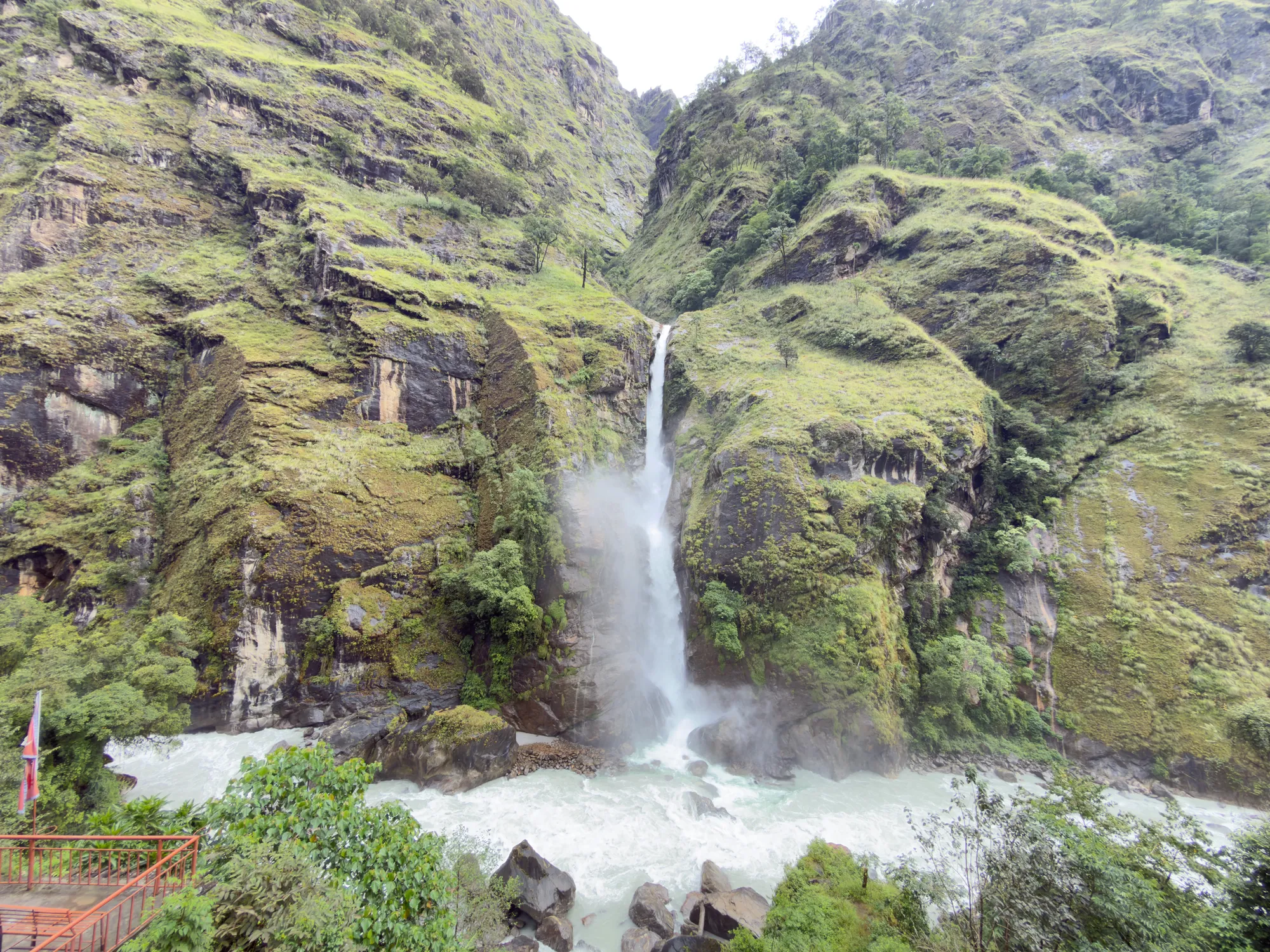
One of the countless waterfalls on the road
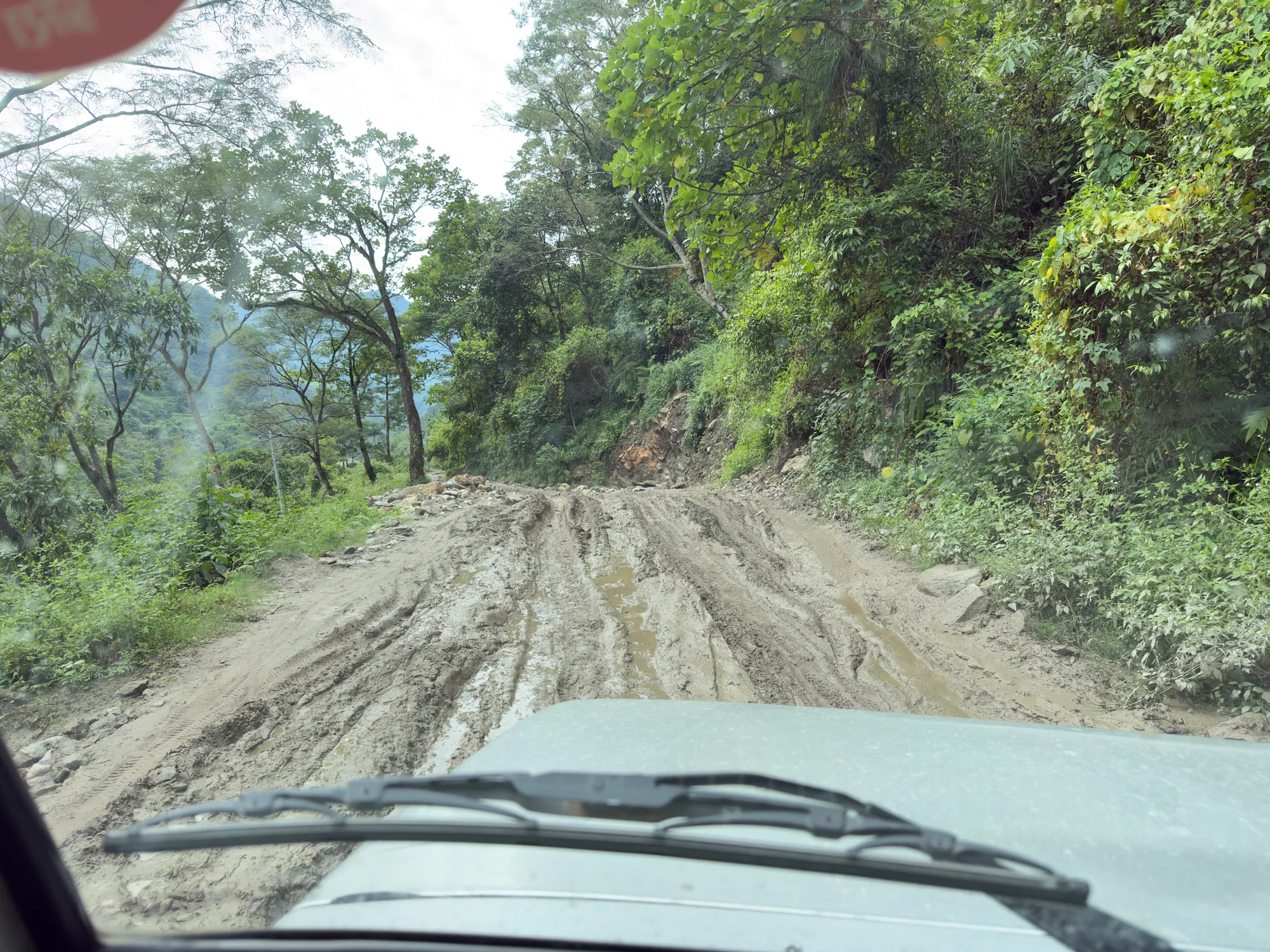
Light mud on the way down the valley
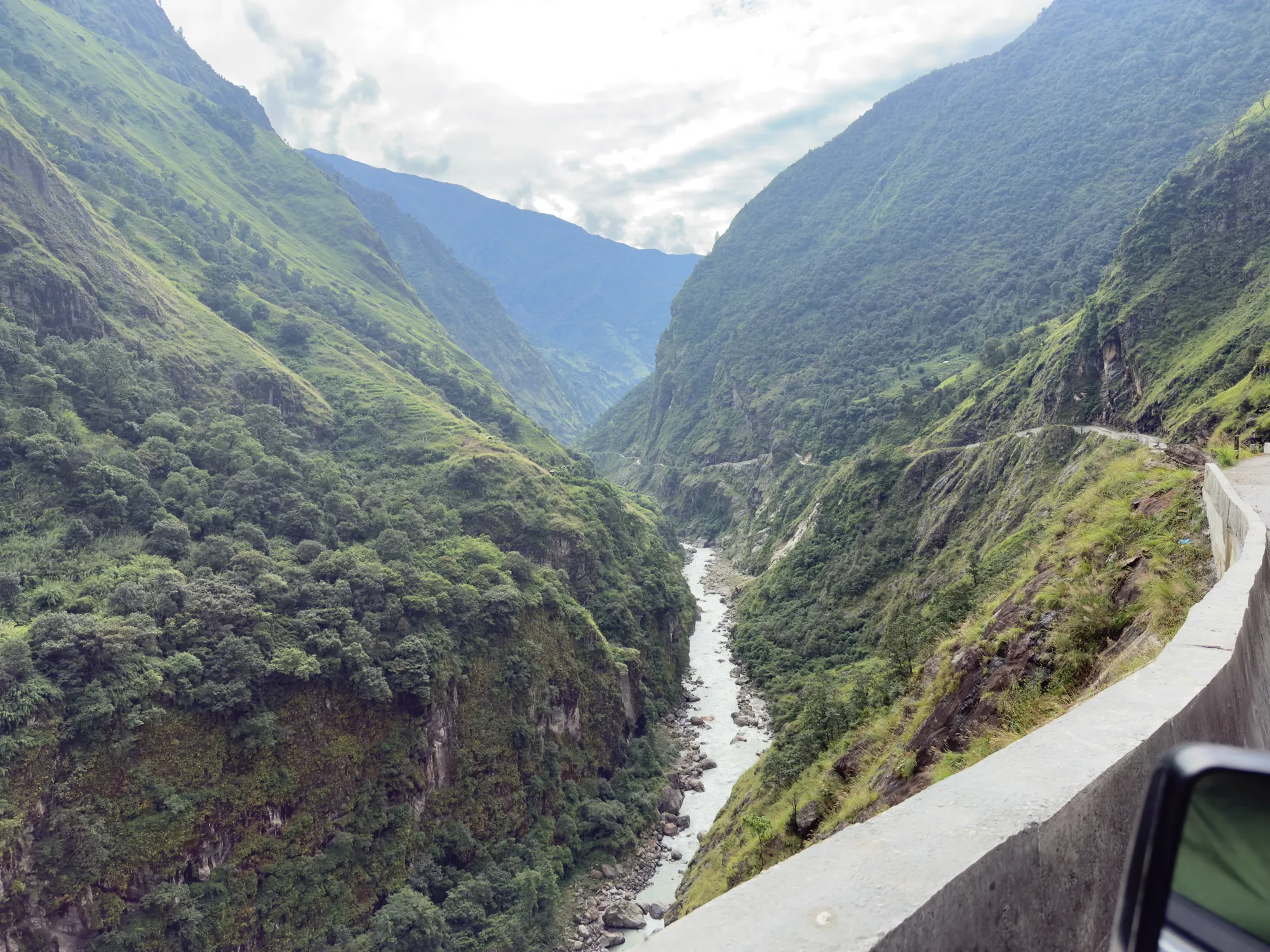
The road down the valley edge
By late morning we reached Besisahar, where we changed into a larger vehicle for the long drive back to Kathmandu. I said goodbye to my porter there—he gave me a huge hug, and I felt unexpectedly emotional. He’d been a fantastic companion: cheerful, tireless, always helpful. This was one of his last trips as a porter; he’s training now to be a guide. Next trek, he’ll be a trainee guide. I hope our paths cross again.
We stopped for lunch in town—my final dal bhat of the trek—before heading out on the highway. The drive was long, nearly seven hours, slowed by trucks and buses squeezing along narrow lanes. After dark, many vehicles, ours included, ran without headlights for half an hour. It reminded me of my porter carrying my bags through the pitch black without a headlamp—apparently, light is optional in Nepal.
We reached Kathmandu around 7 p.m. At the hotel, my stored luggage had already been placed in my upgraded room. The “upgrade” turned out to be a larger TV and a slightly better view, but it was clean, comfortable, and perfect. I took a long, hot shower, ate a real meal in the hotel restaurant, and collapsed into bed.
The trek was over. My legs were tired, my body spent, but more than anything, I felt emotionally emptied.