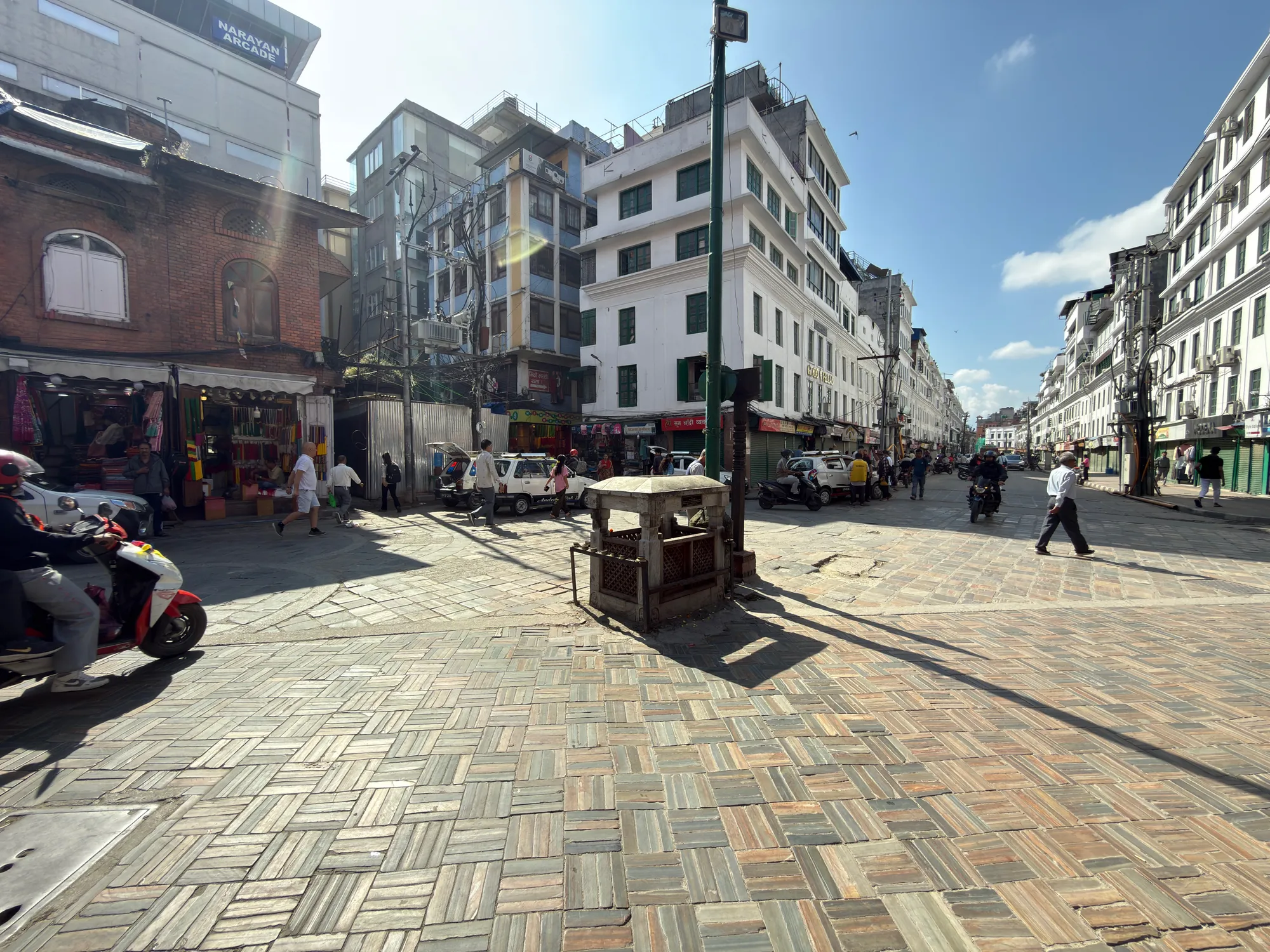
I started the day at 4 a.m. Not because I needed to be anywhere, but because my body clock is still on East Coast time. A nap later seemed likely, but for now, I was up and ready to tackle whatever the day had planned.
I did a bit of “squirreling,” as my wife calls it—sorting what would come on the trek from what would remain behind in Kathmandu. I drafted a list of items to buy, to rent, and sketched a rough plan for the day.
By 7 a.m. I was downstairs waiting for a taxi to Swayambhu, the Monkey Temple overlooking Kathmandu. There I bumped into a Croatian woman setting off solo for Everest Base Camp. Her Lukla flight had been canceled several times, stranding her in Kathmandu longer than intended. That’s one worry I don’t share—no hair-raising landing at the world’s scariest airport for me. Just a cheerful seven-to-nine-hour jeep ride.
My taxi pulled up, plastered with giant WRC (World Rally Championship) stickers. I quickly realized these weren’t a declaration of fandom but a warning: the driver would be treating Kathmandu’s streets like a rally stage. Within minutes I regretted not packing Dramamine in my day bag.
We made it to Swayambhu, where I gratefully escaped the car only to be confronted by 365 steep stairs. The place is crawling with monkeys—grooming, fighting, stealing fridge magnets, feasting on offerings, and engaging in activities destined to prompt awkward parental explanations. They move with the swagger of creatures who know they’re sacred and can therefore rifle through your backpack with complete theological immunity.
I managed forty steps before pausing to “admire the view.” An elderly woman, easily eighty-five, breezed past me with her own body weight in marigolds.
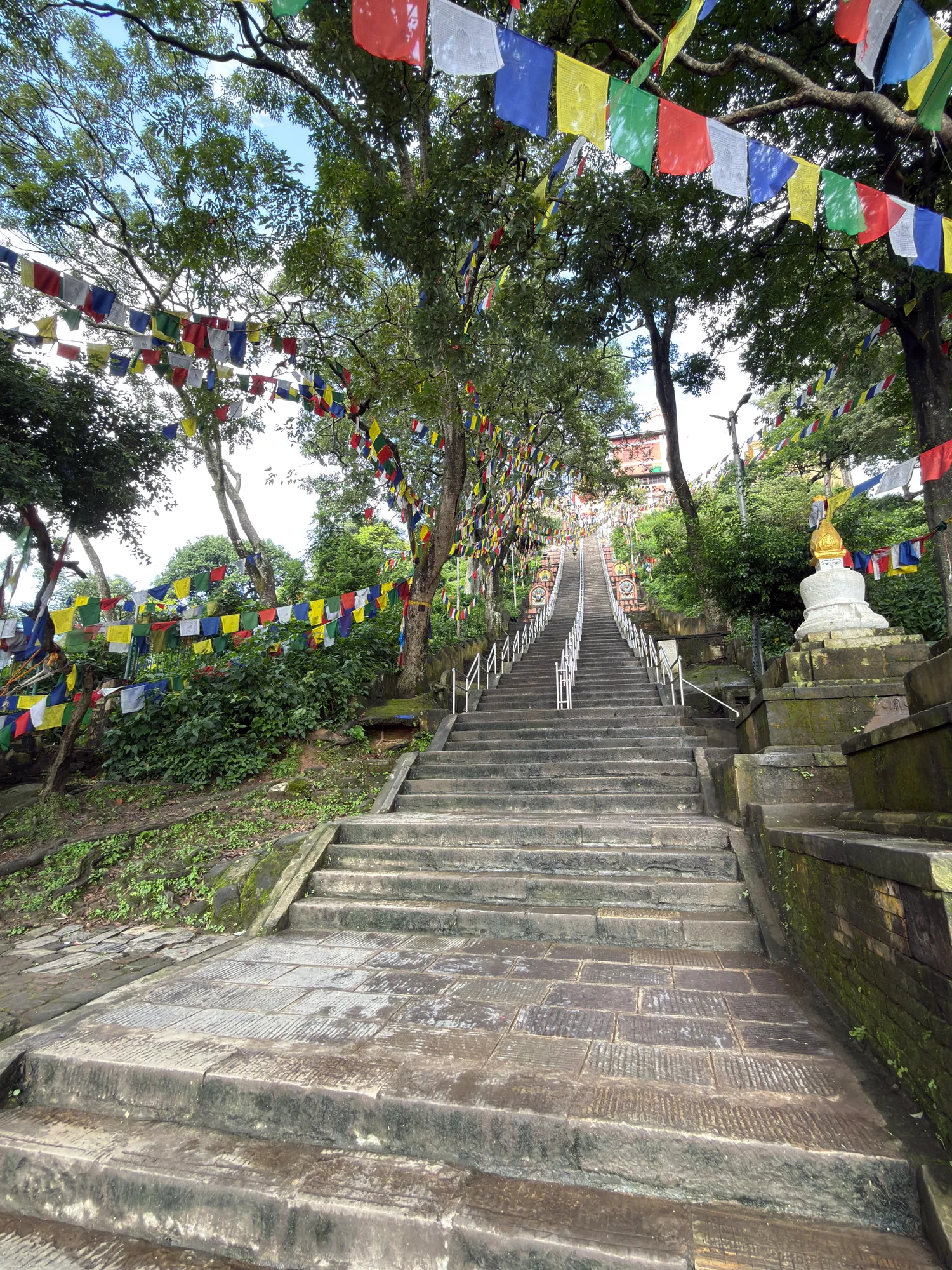
The real enemy isn’t just the stairs—it’s the stairs combined with Kathmandu’s altitude, just high enough for oxygen to feel optional. By step 200 I was seriously considering conversion to any religion that included sedan chair transport.
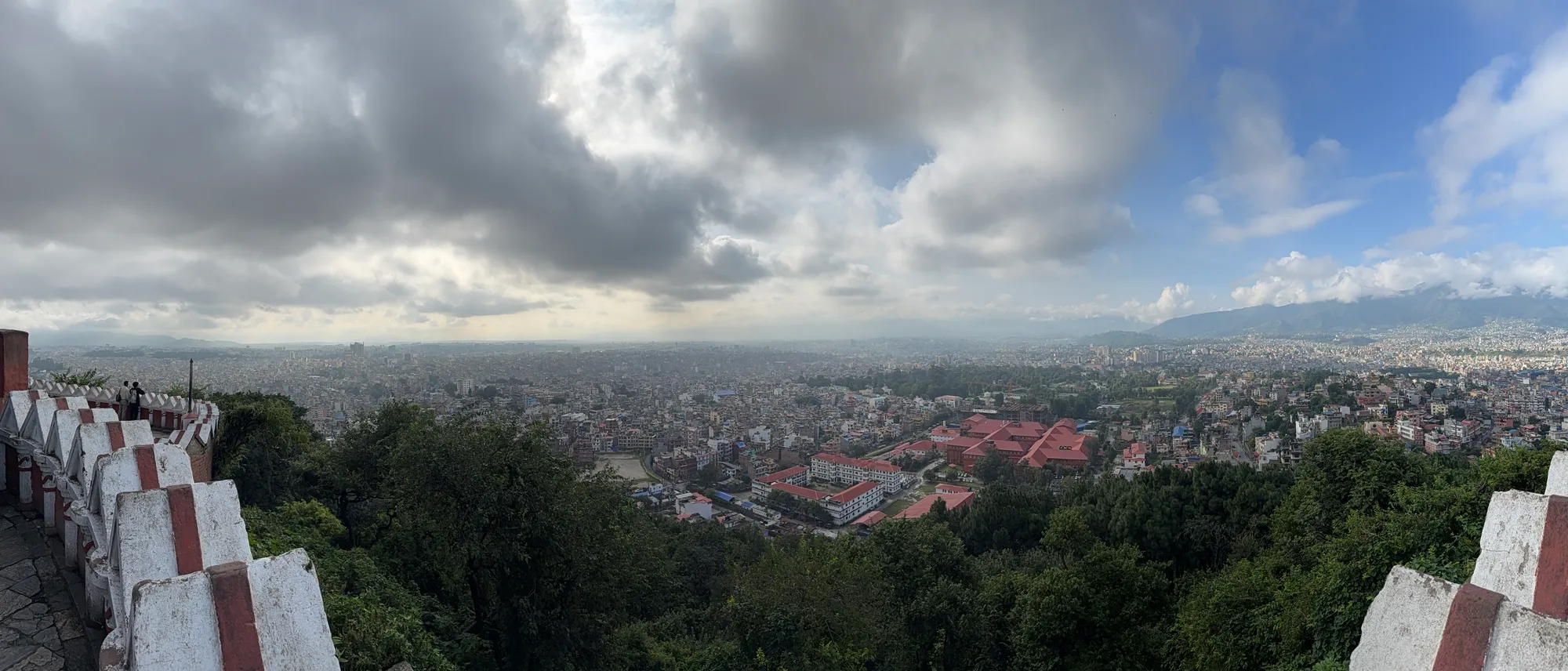
But then you reach the summit, and for a moment forget about your imminent cardiac arrest. The Kathmandu Valley sprawls out like a vast, hazy, slightly disheveled quilt. Prayer flags snap in the wind like a thousand tiny applause. At the center sits the great white dome of the stupa, an enormous cosmic egg streaked with yolk-yellow stains. The painted eyes gaze out in four directions, supposedly with infinite compassion but giving more the impression: “I saw what you did behind the taxi driver, and we need to talk.” Between them rests what looks like a question mark but is in fact the Nepali number one, symbolizing unity. Though watching two monks argue beneath it over a mobile phone, I suspected the symbolism might be aspirational.
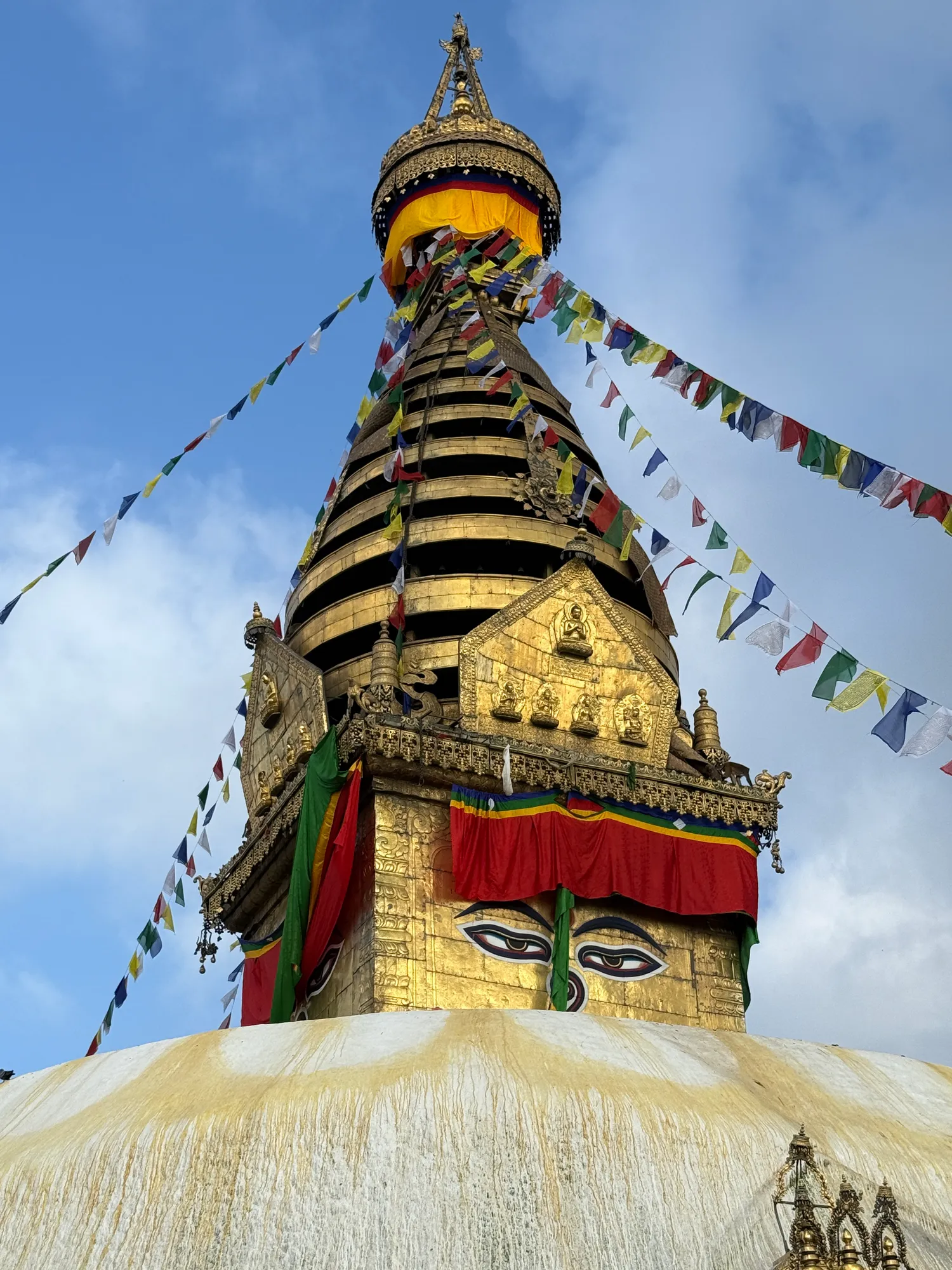
The top of the stupa
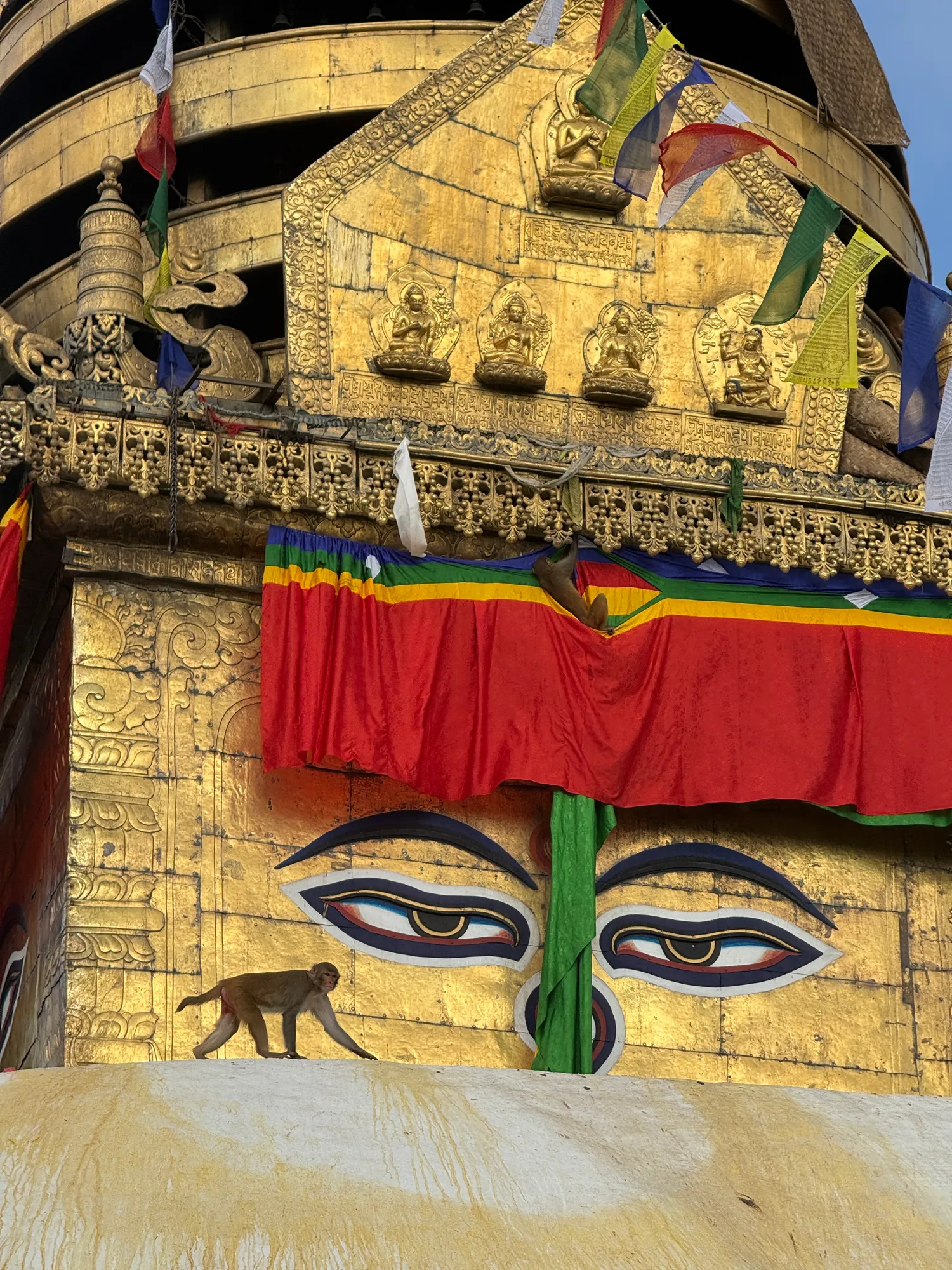
Monkey & the eyes
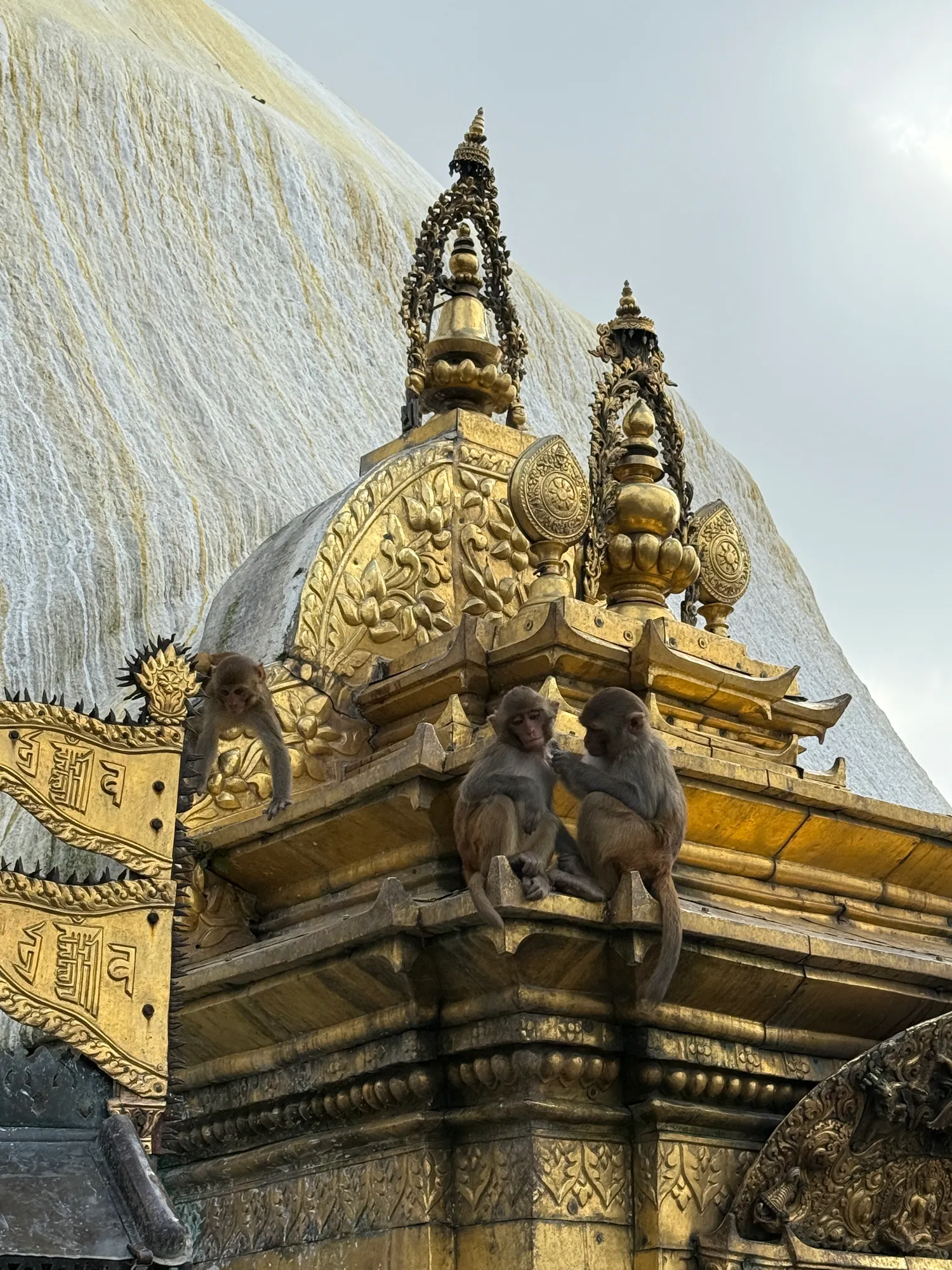
Preening on the temple
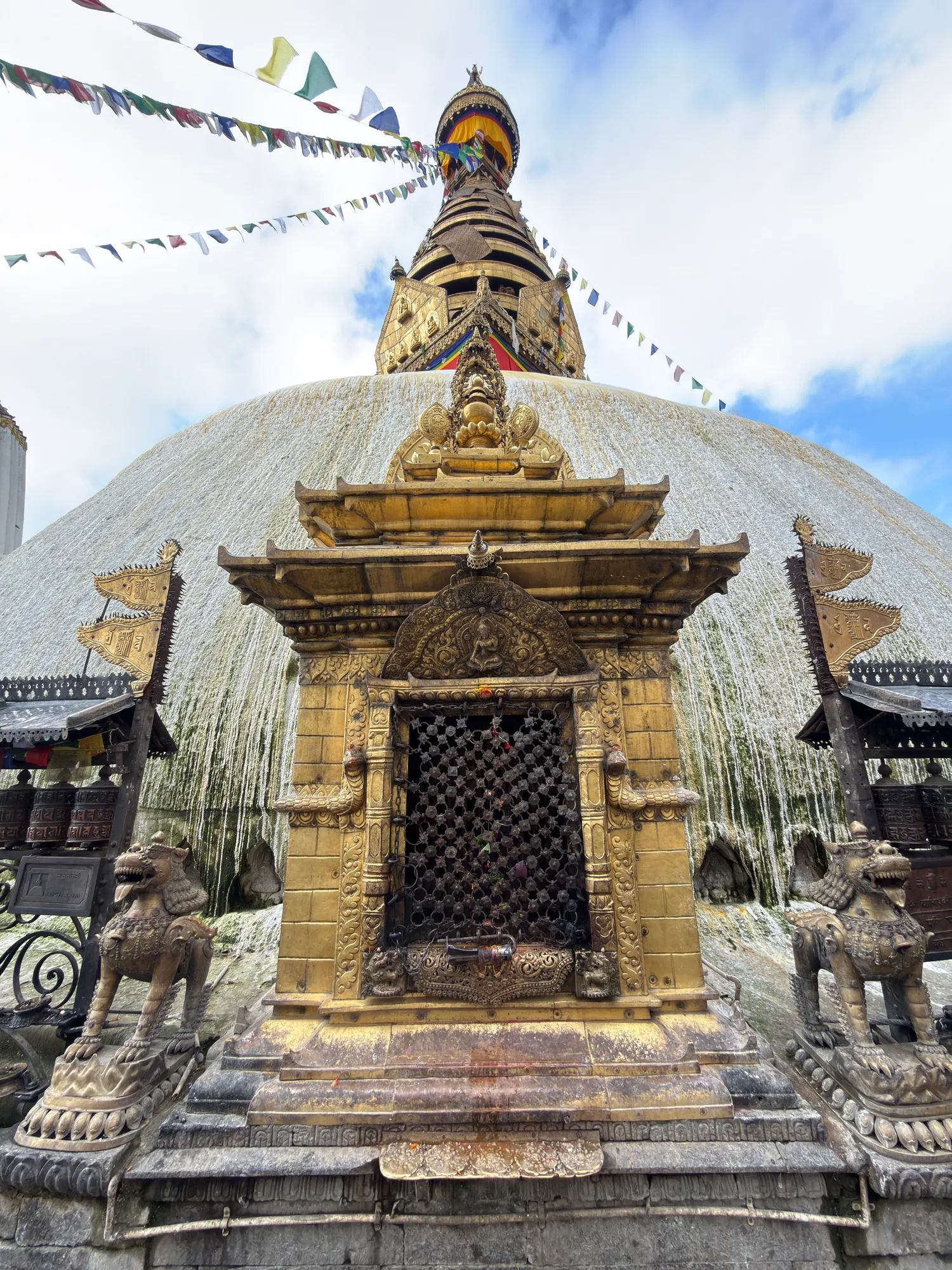
Shrine attached to the stupa
I wandered around, accidentally intruding on someone’s TikTok workout. Normally I’d grumble, but under the stern gaze of Buddha’s eyes I sheepishly drifted away. I circled the stupa three times as tradition requires, though the third lap was mostly because I couldn’t find the ‘reduced step count’ exit. For a moment I felt like Chevy Chase stuck in a roundabout. The devotees spin the prayer wheels as they go—massive brass cylinders that thunk-thunk-thunk like the world’s most spiritual washing machine. I gave one a cautious spin and was immediately judged by an elderly woman with the exact look one reserves for someone who’s just used the wrong fork at a society dinner party.
The monkeys treat the whole sacred site like their personal theme park. I watched one swipe a carefully arranged offering; the family, remarkably calm, shrugged it off as a “monkey’s blessing,” though the wife’s face suggested she was contemplating less charitable theology. Another monkey was using a prayer flag to pendulum swing, Indiana Jones-style.
The descent was worse than the climb. My knees filed for divorce, and the monkeys shadowed me like pickpockets in training. One particularly persistent creature followed me down a hundred steps, darting at my shoes in what felt like psychological warfare.
At the bottom, a taxi driver asked if I wanted a ride back to Thamel. “You look tired,” he said, which is rather like telling the Titanic it looked damp. I declined—I’d already had one rally car experience for the day. Besides, I figured I could use the karma points. Somewhere up the hill, Buddha’s enormous painted eyes were still watching.
From there I walked to Durbar Square—my second UNESCO World Heritage site of the day. The route took me through local neighborhoods, and I tried to pay attention to what life in Kathmandu feels like. A few things stood out. First: this city is clean. Incredibly clean compared to India’s Agra and especially Mathura. Second: it’s relaxed. There’s plenty of traffic, but mercifully none of the relentless honking that had driven me half mad in India. Third: the locals don’t harass you. In India I often found myself saying “no” a dozen times in a block; here, after walking 6 mi around the city, I never had to say it more than once. I declined hashish only twice, and even the tour guides were disarmingly polite. They’d introduce themselves, ask where I was from, and when I declined a tour, simply tell me to ask if I needed anything later. After the Fatehpur Sikri hawkers near Agra—still the worst I’ve ever experienced—I’d been braced for something similar in Kathmandu, and was profoundly grateful it didn’t materialize.
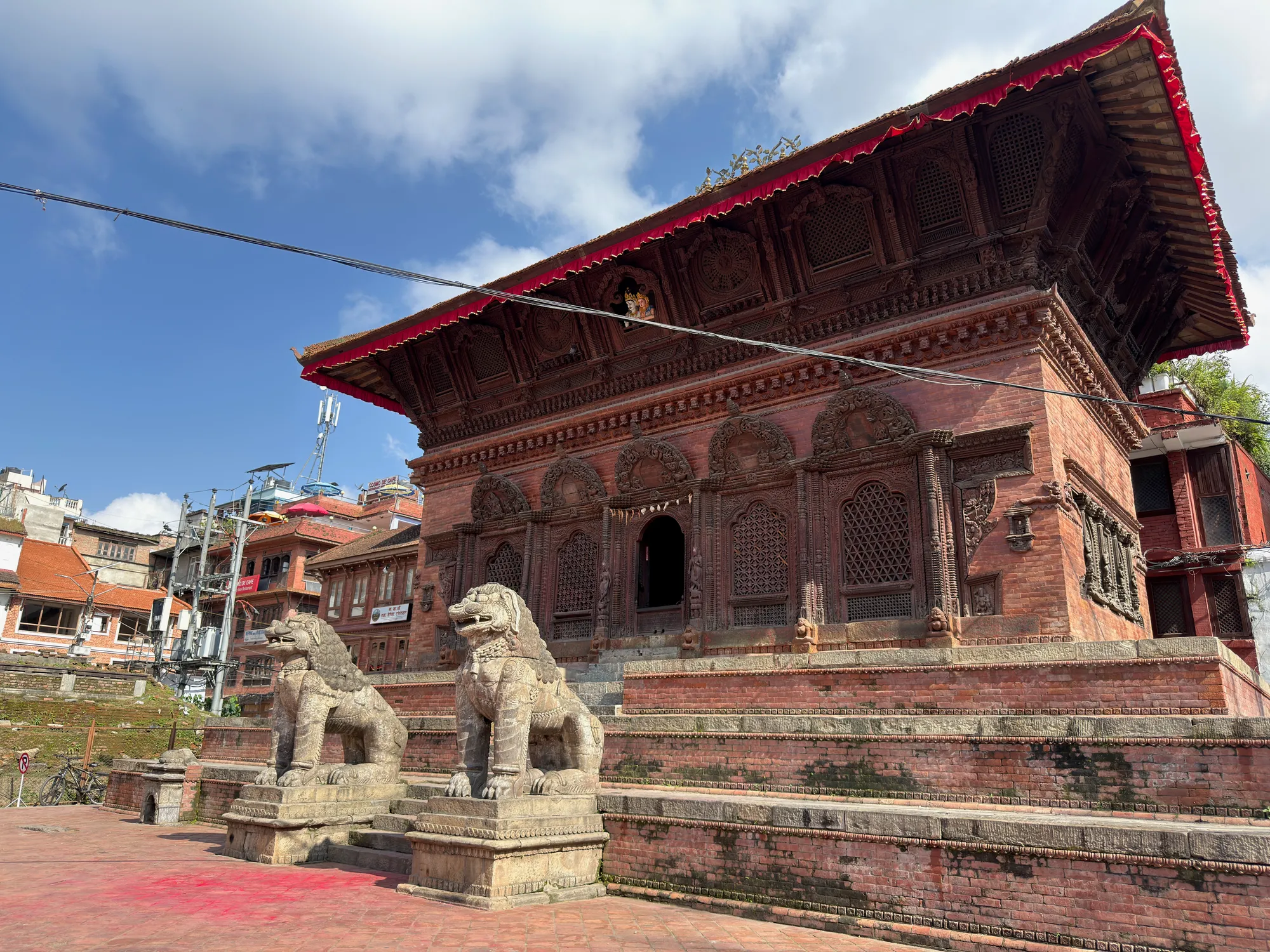
Durbar Square Scene
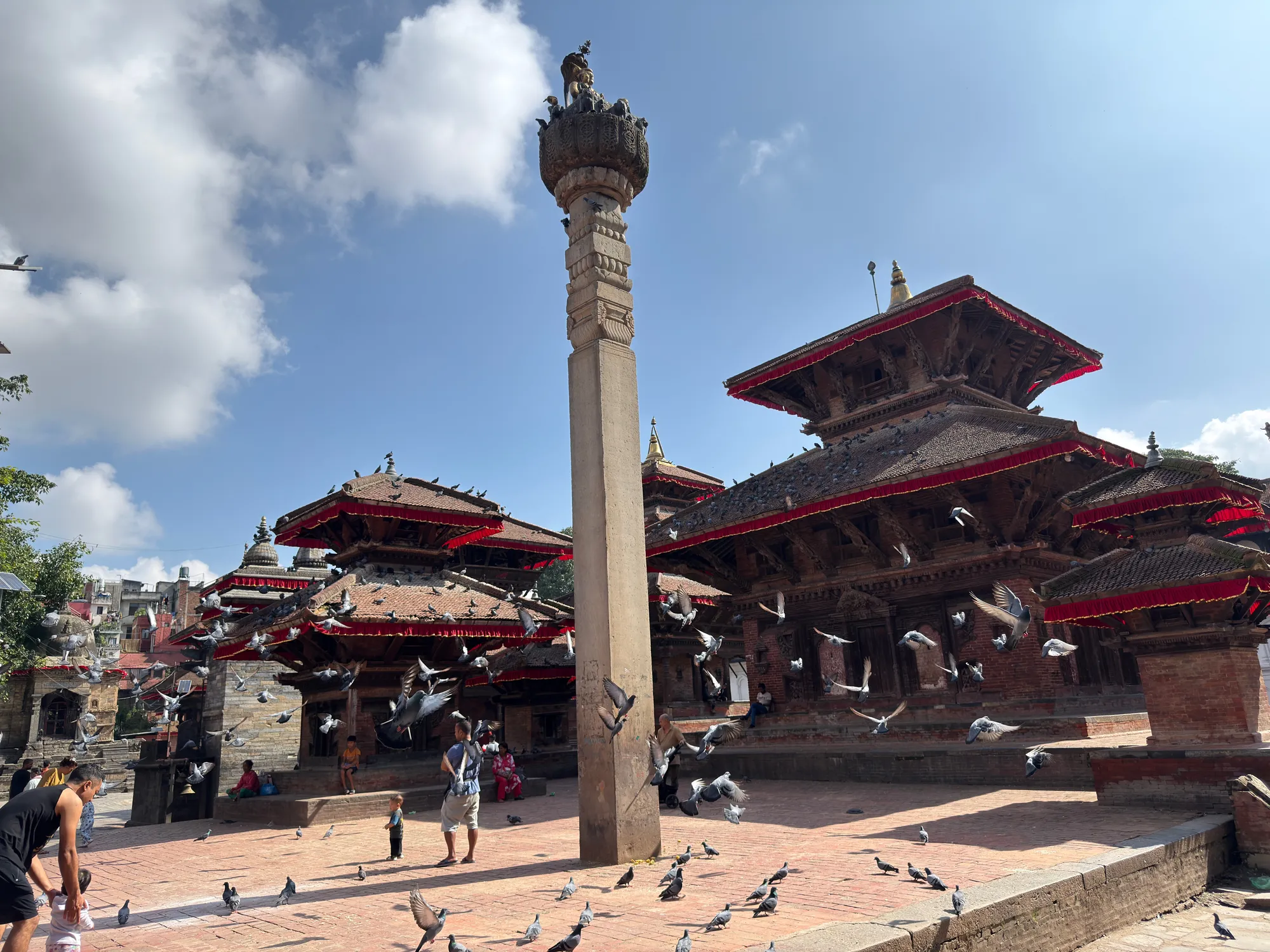
Durbar Square Scene
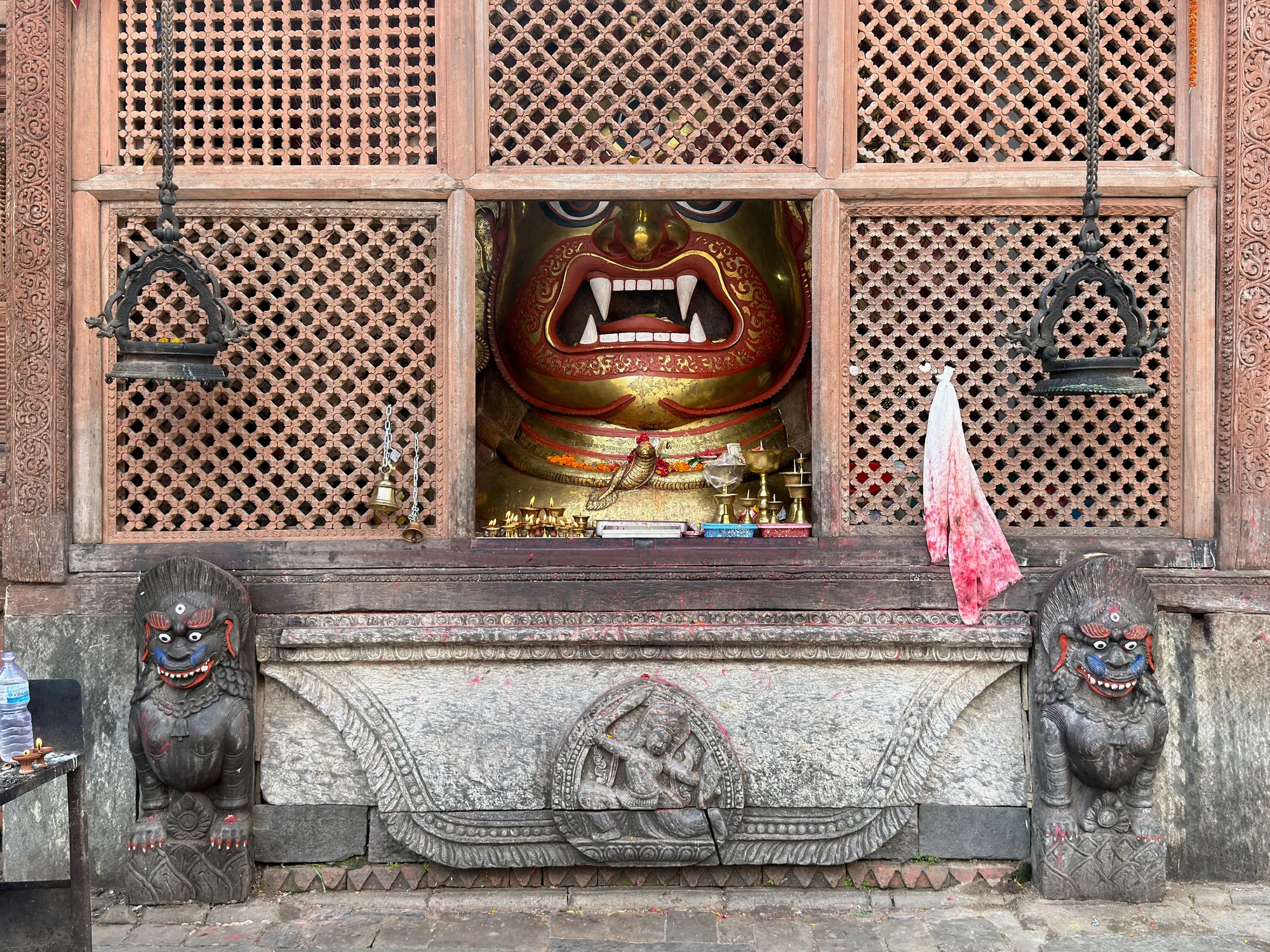
Durbar Square Scene
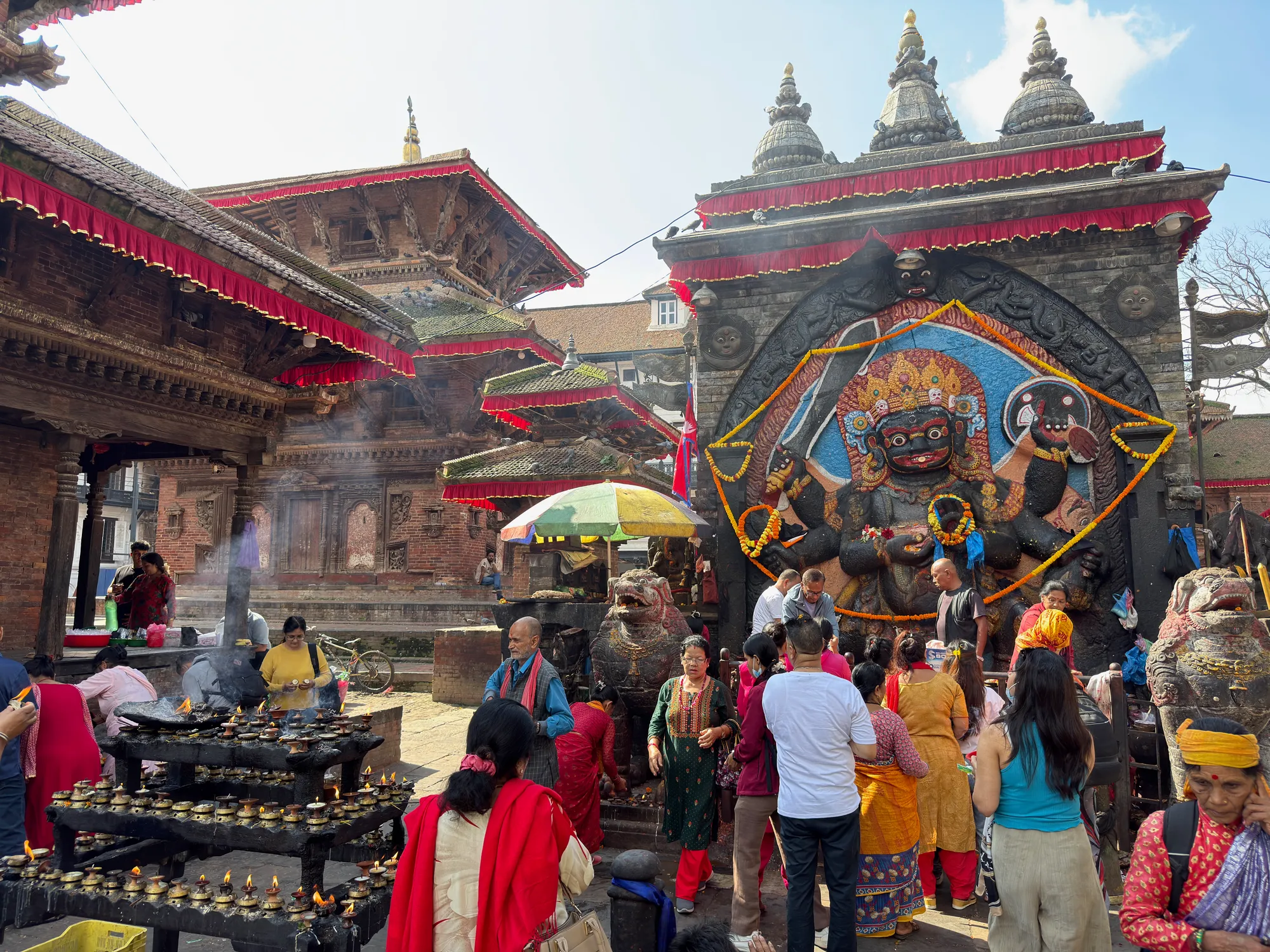
Durbar Square Scene
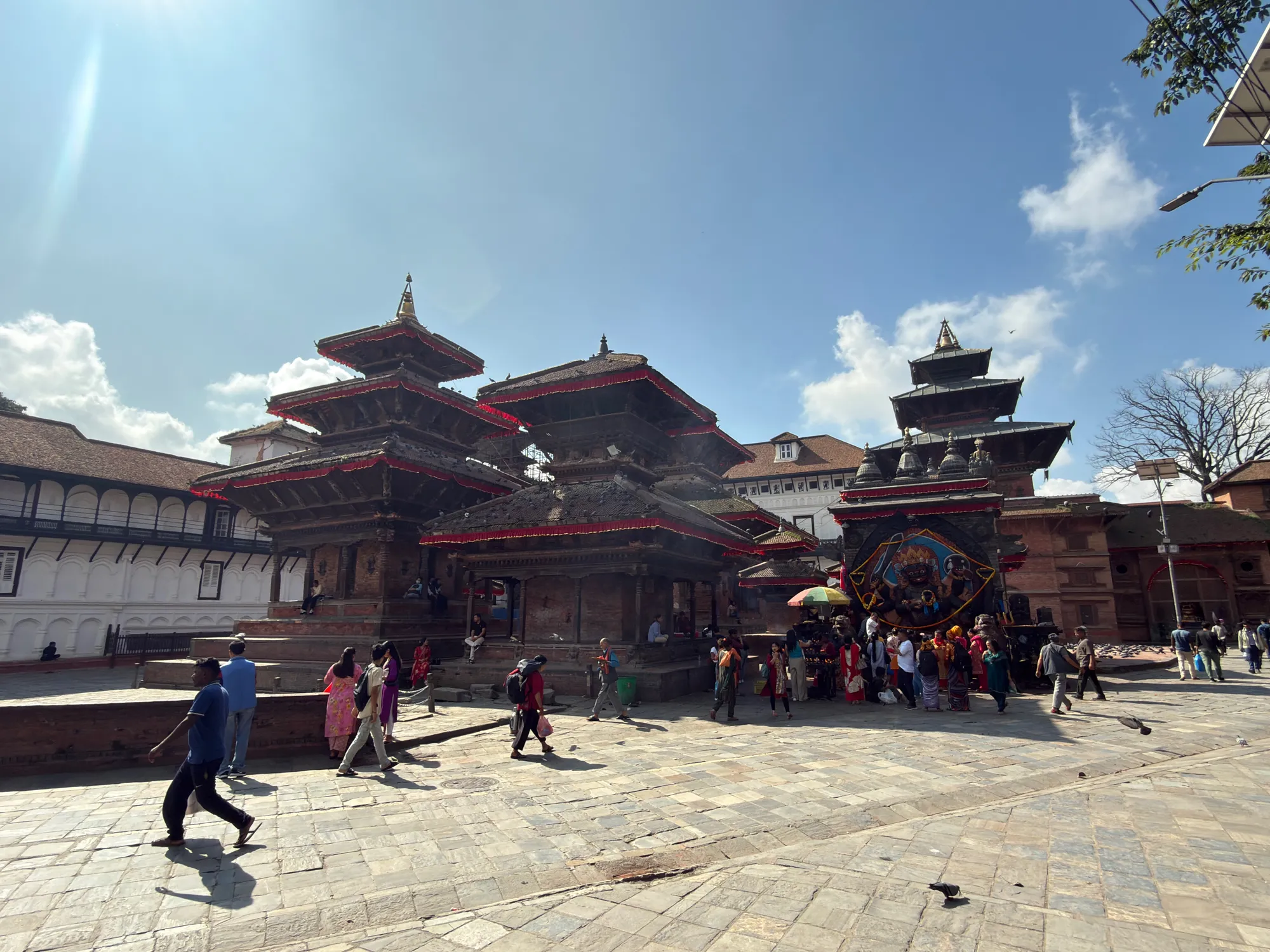
Durbar Square Scene
At Durbar Square itself, the architecture is genuinely something special. The mix of Buddhist symbolism and Hindu gods feels almost seamless, as though the two traditions have been woven together into a system that just… works here. In India, I’d found Hindu and Muslim communities far less integrated; here, Buddhism and Hinduism seemed to coexist with ease.
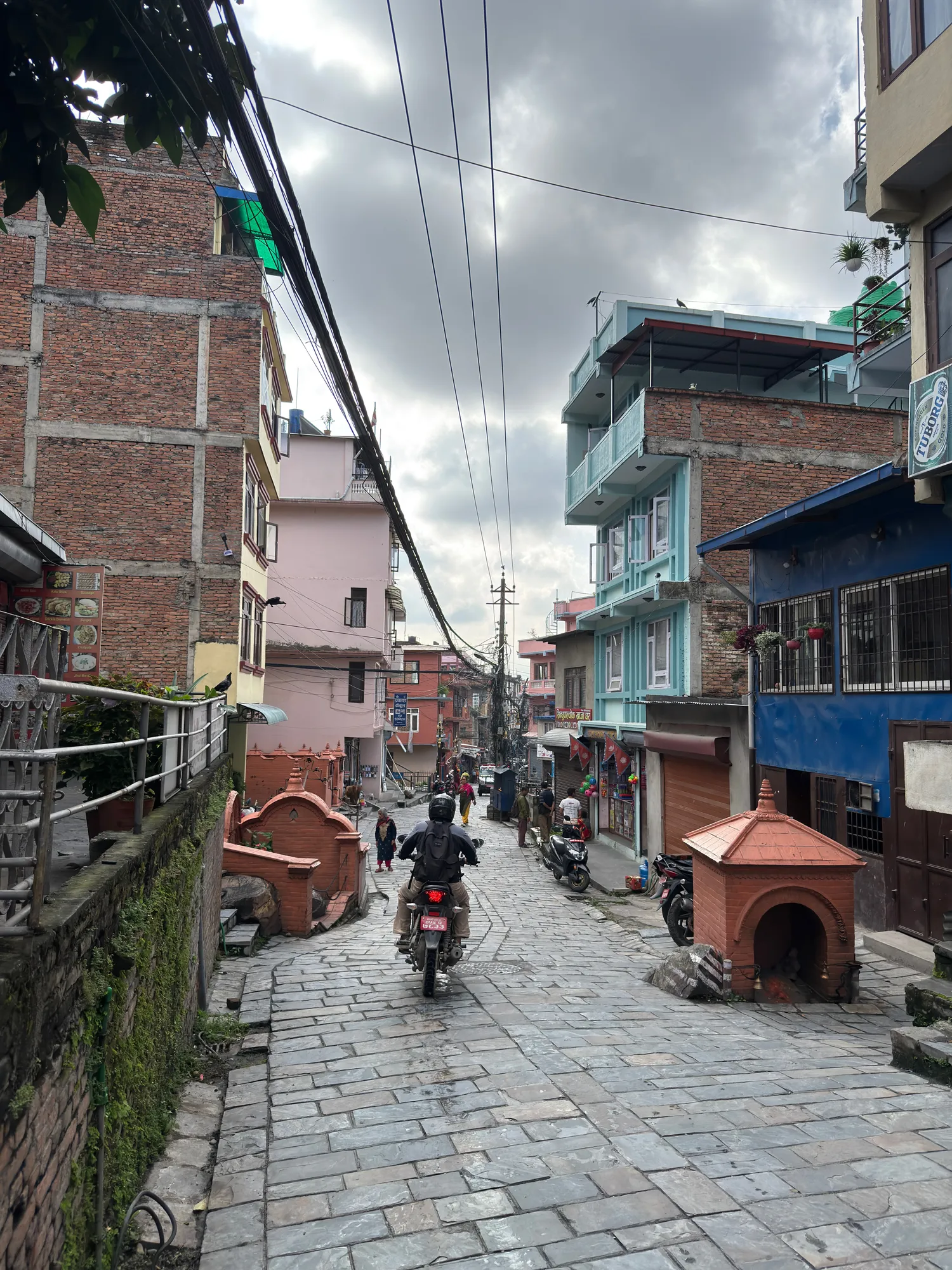
Random Shrine on my walk
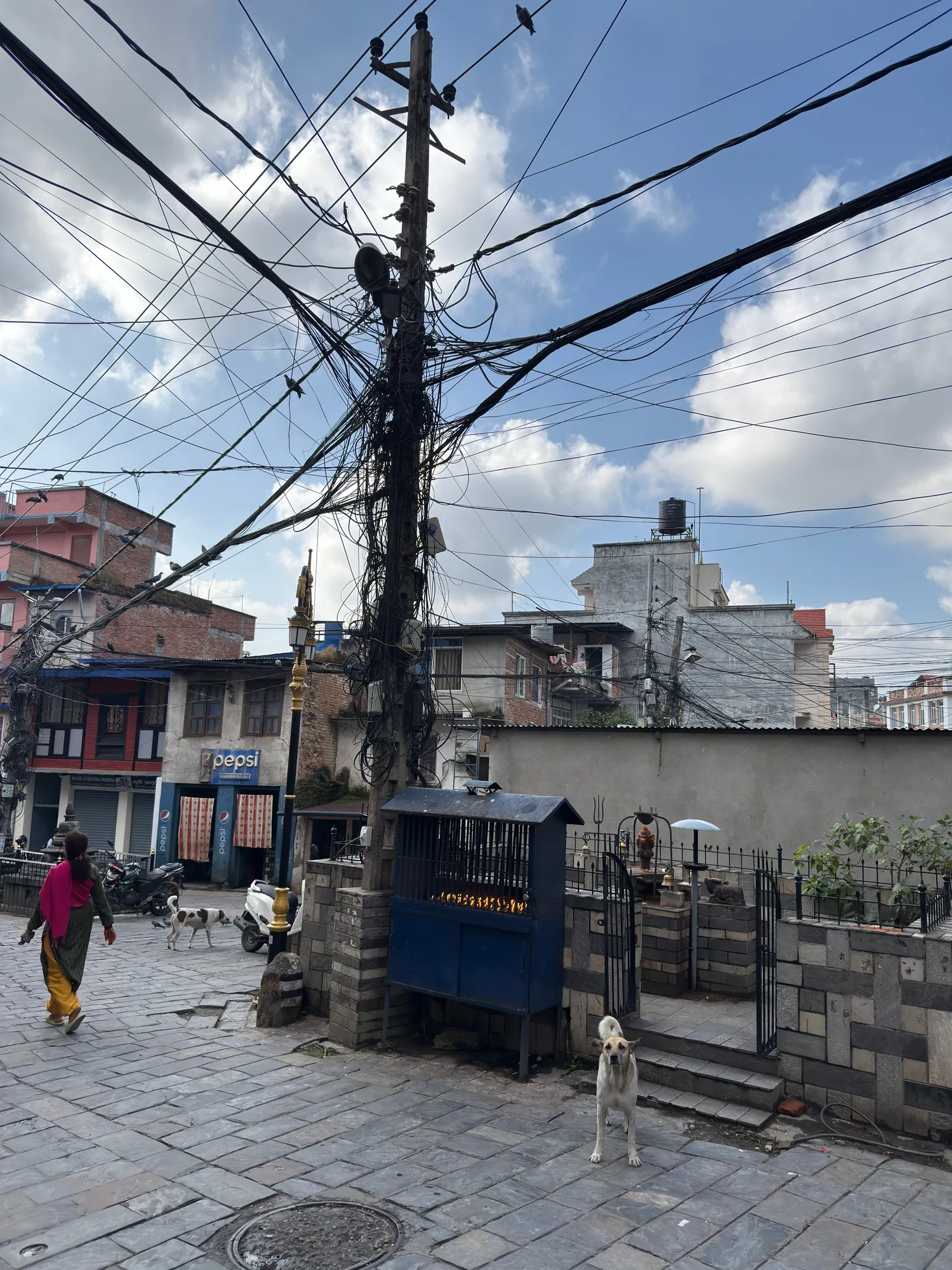
Random Shrine on my walk
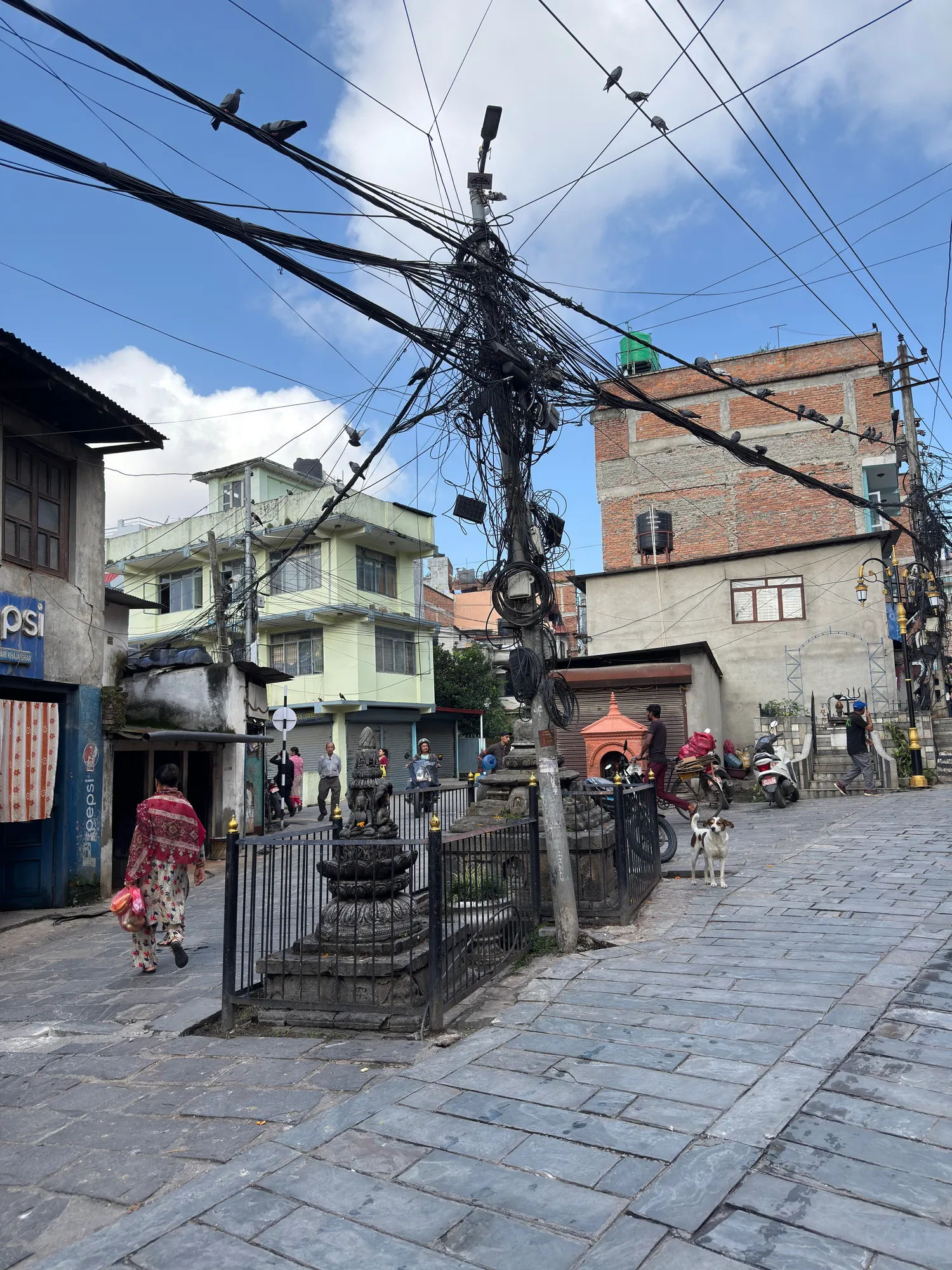
Random Shrine on my walk
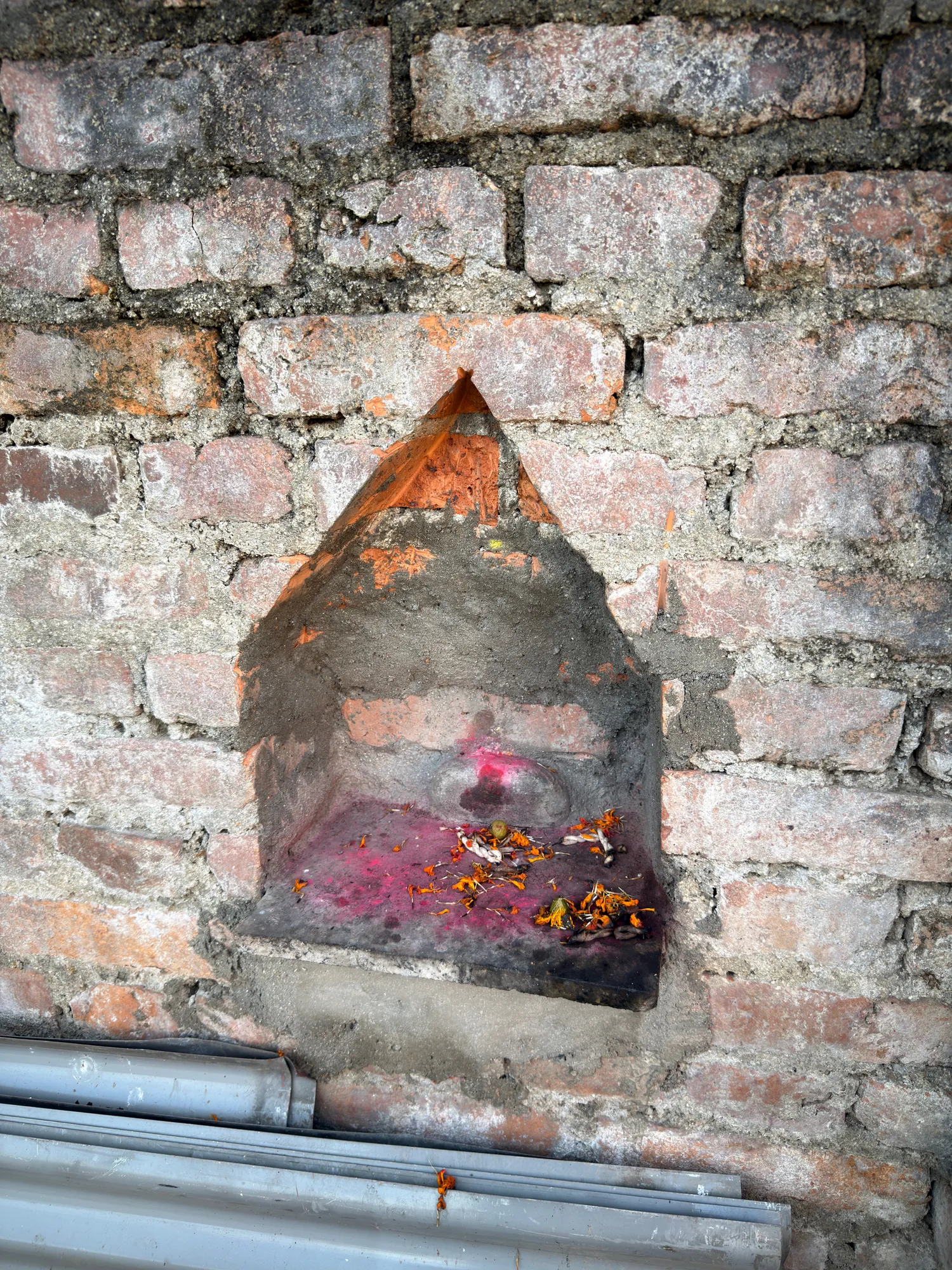
Random Shrine on my walk
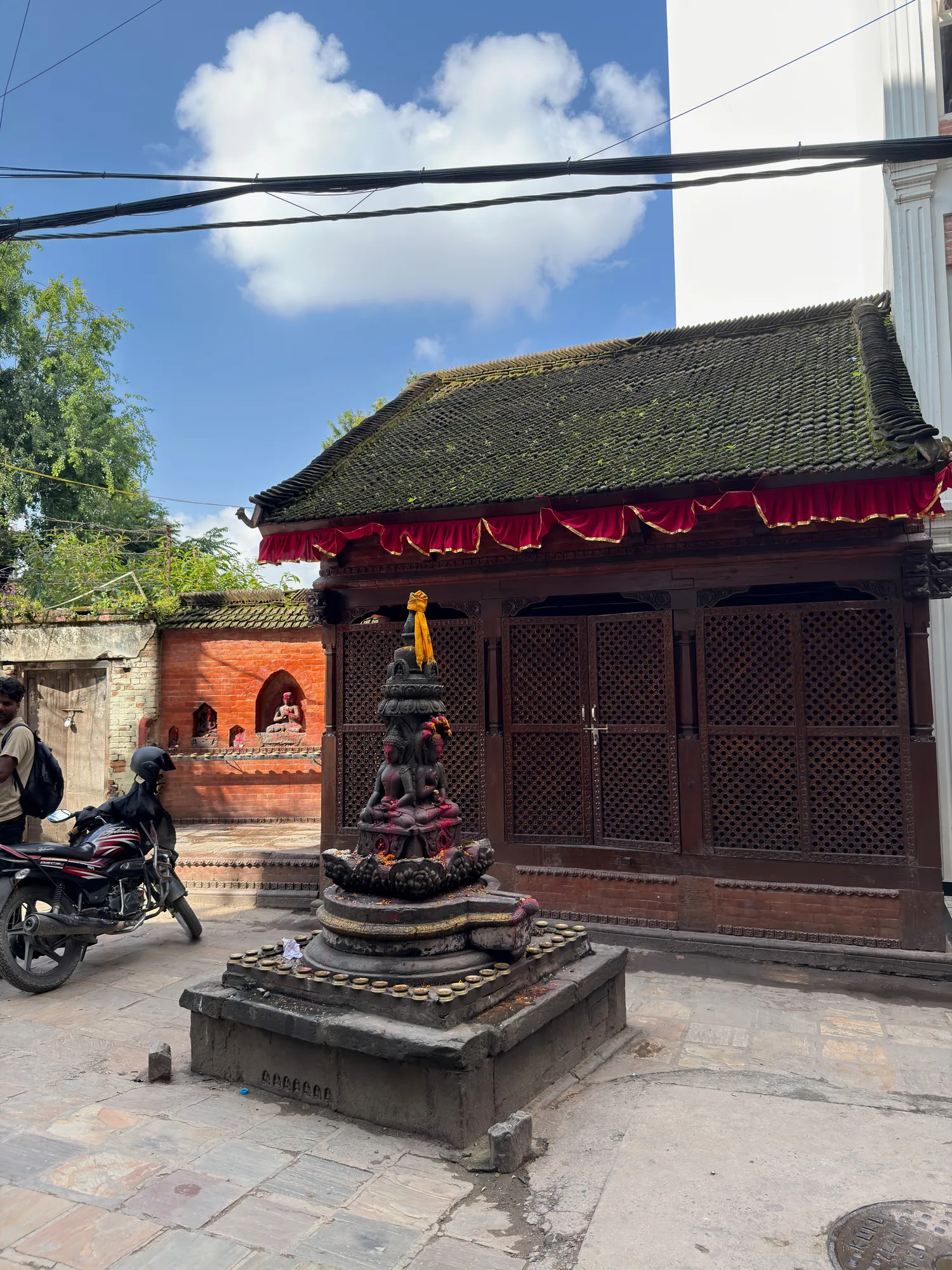
Random Shrine on my walk
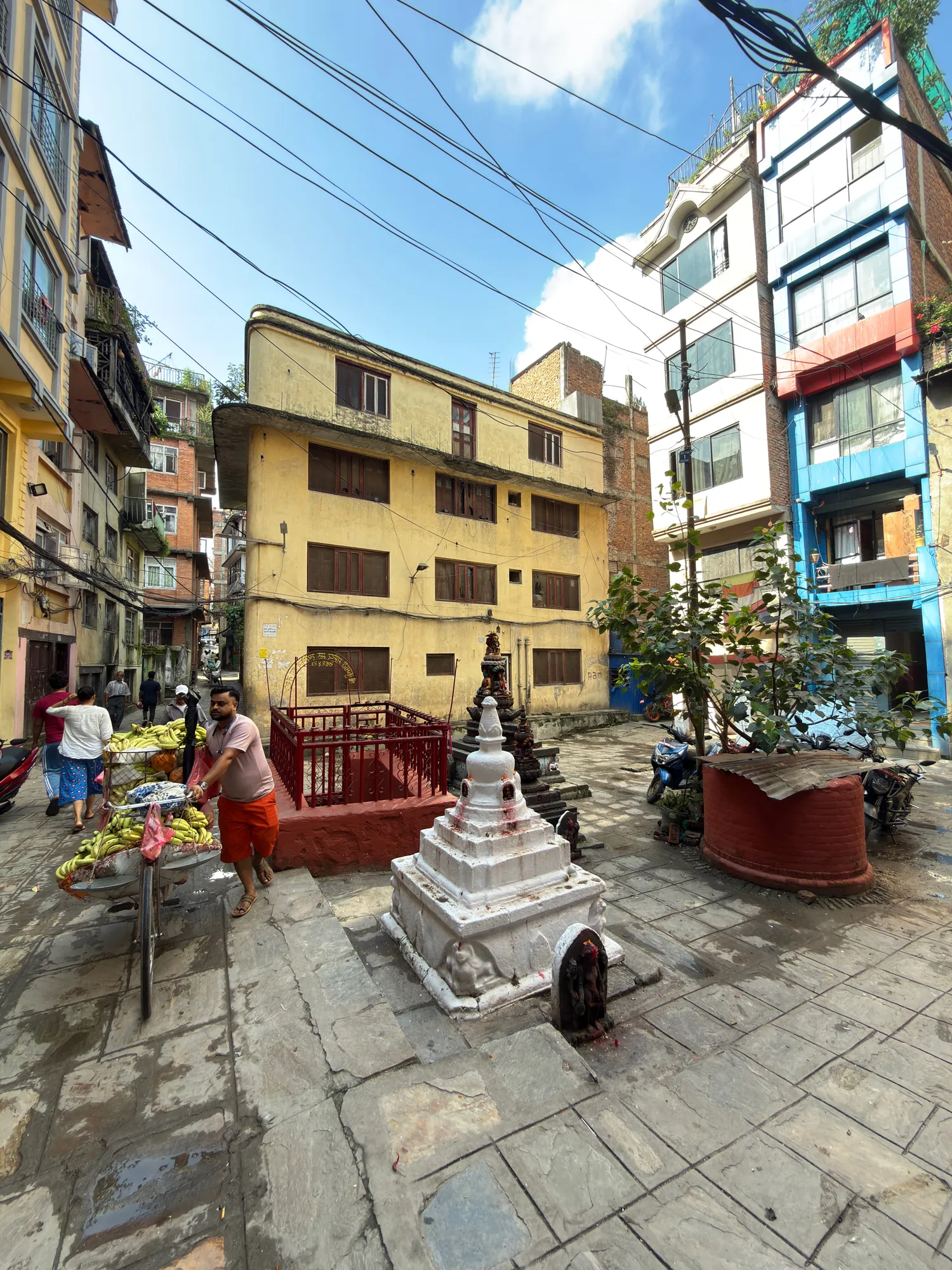
Random Shrine on my walk
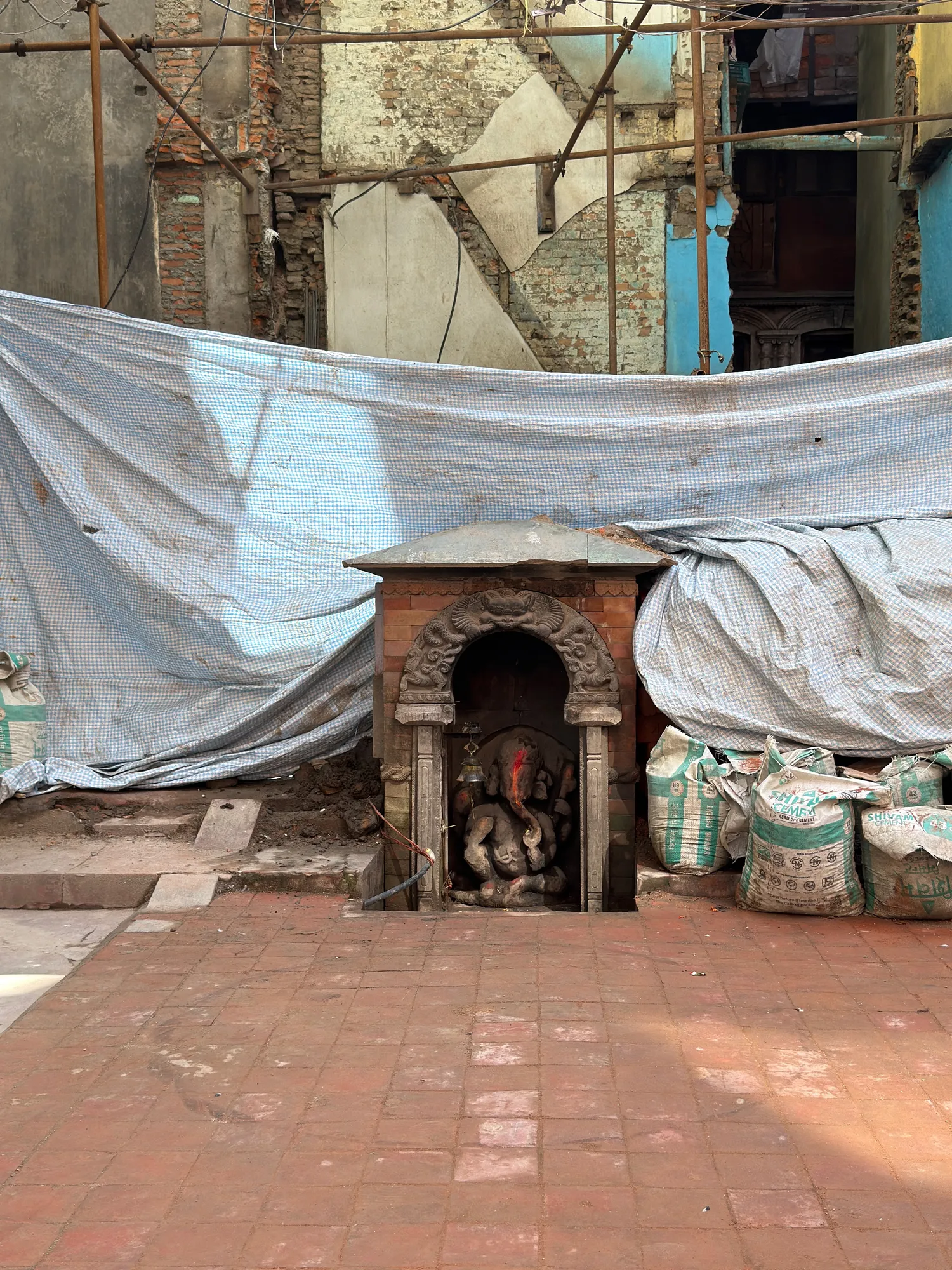
Random Shrine on my walk
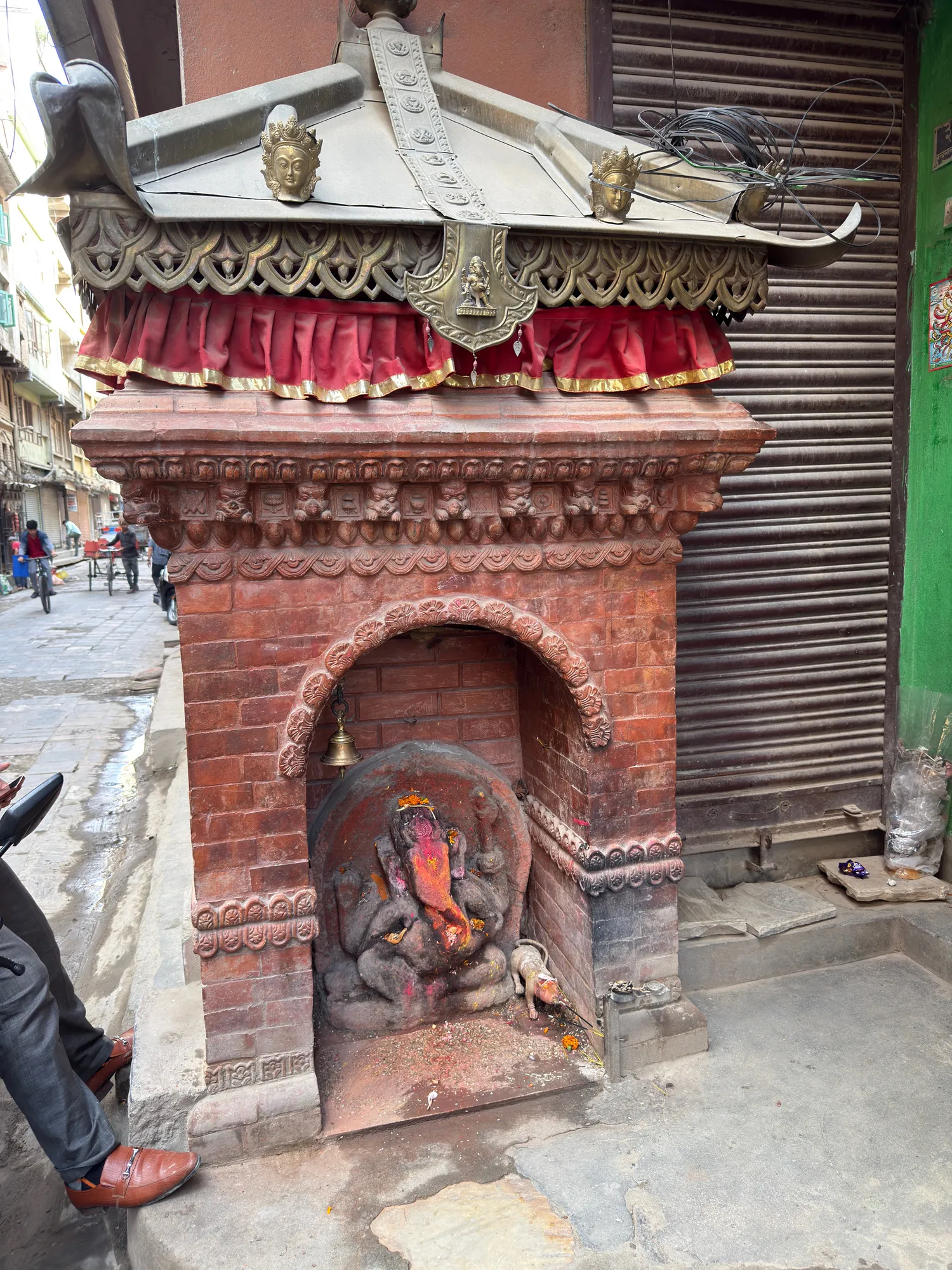
Random Shrine on my walk
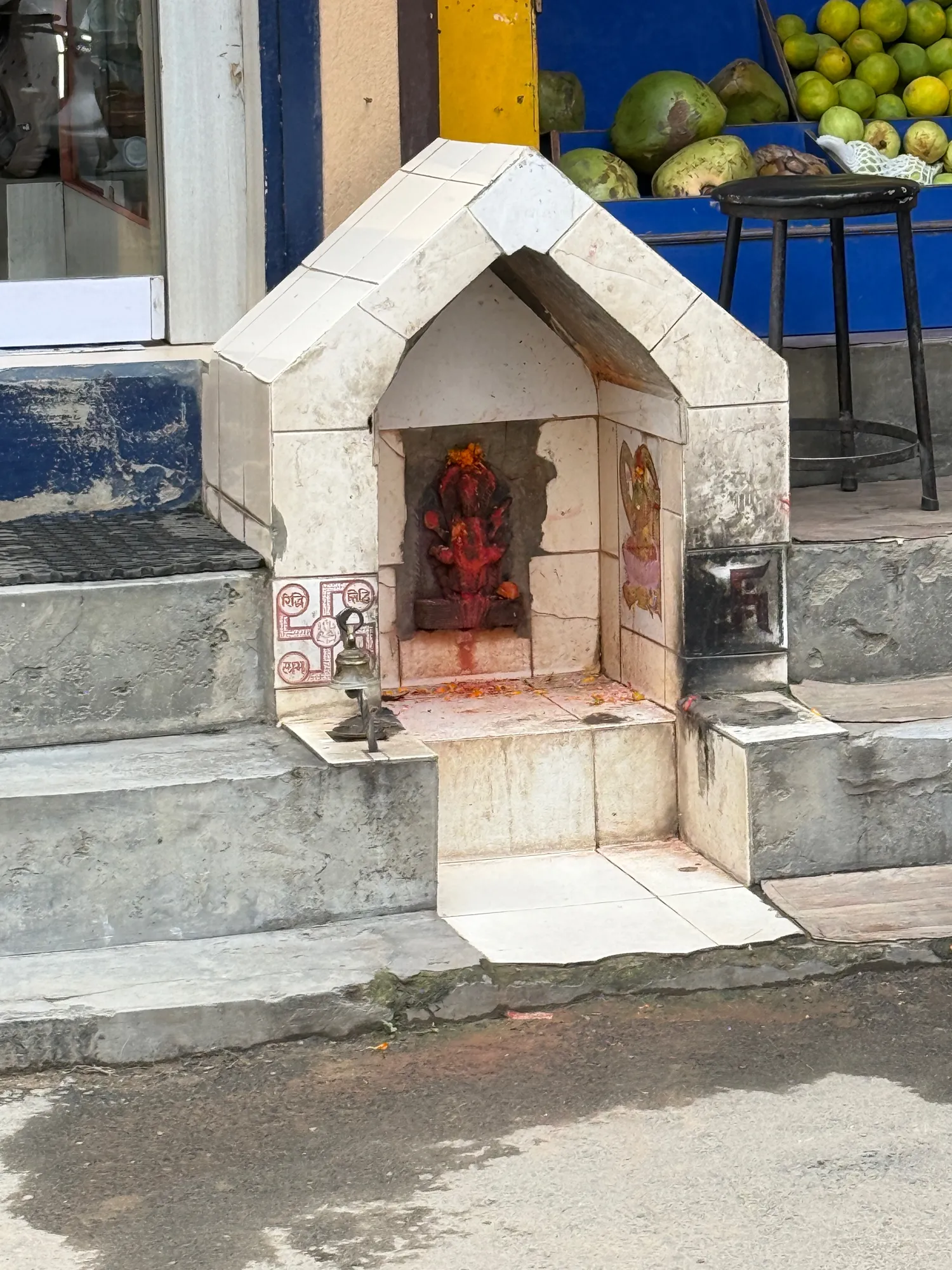
Random Shrine on my walk
From there I wandered into Thamel, the tourist quarter of Kathmandu: an impossibly tangled knot of streets so narrow that a single enthusiastic sneeze could flatten a fruit stand on one side and accidentally purchase a singing bowl on the other. It reminded me of the medieval quarters of certain European cities that somehow dodged the 20th century’s passion for concrete—cobbled lanes where two people can’t pass without a sideways shuffle, shops selling items apparently invented solely to baffle tourists, and the constant, nagging certainty that you are comprehensively lost.
What strikes you most about Thamel—apart from the motorcycles, which will strike you literally if you’re not concentrating—is the sheer density of divinity. Back home, every corner has a Starbucks. Here, every corner has a shrine. Sometimes two. I counted fourteen deities on one blessed little stretch of alley, not even including the brass Buddha decorating a German bakery. A toaster-sized Ganesh presides over an intersection where seven streets meet (none of which, naturally, led where I wanted to go). A Shiva lingam has claimed squatter’s rights on what passes for a sidewalk. And at least three Bhairav masks stare out with the expression of something that might cheerfully eat your soul if you neglected to leave a donation. The whole arrangement reminded me of Iceland, where elf rocks are sometimes left in the middle of streets.
And these aren’t apologetic little shrines tucked out of the way. They’re proper installations, complete with bells, butter lamps, marigolds, and enough incense to fumigate a small hospital. The effect is like being at a perpetual cocktail party where all the guests are immortal and just a bit demanding. Walking the streets becomes a social dance: head-bobs, coin offerings, sudden sidesteps when you realize you’ve nearly trampled someone’s puja. I stopped to photograph one particularly photogenic shrine and was immediately surrounded by three dogs and a man trying to sell me a flute. The dogs, at least, showed better etiquette—they circled respectfully around the shrine.
Still, there’s something marvelous about it. In most cities you’re watched by CCTV, traffic wardens, and people judging your shirt color. In Thamel, you’re watched by gods who were there long before your country existed and will still be there when your hotel is repurposed into a meditation retreat. It’s oddly comforting—even if Ganesh did watch me walk into the same dead-end alley three times in one morning.
After more than 6 mi of wandering Kathmandu, I stopped at a buffet for lunch: a vegetarian dal and rice dish. Not quite dal bhat, but close enough.
By now it was time to meet up with my trekking company and make a few last-minute purchases. My first Thamel buy was a pair of no-name “Gore-Tex” outer gloves. They seem good enough to last the three days I need them—though I was warned to save them just for the pass day—but at $7, I wasn’t about to complain. The same thing from Outdoor Research would have set me back $150.
Next came a pair of fake Croc-like shower shoes, which led to my first attempt at haggling in Kathmandu. The opening price was 2,500 rupees (about $18). I laughed, walked straight out, and ended up paying 1,000 (about $7). We both seemed happy with the deal.
Finally, I went to the trekking shop to sign the paperwork, review the plan, and pick up my 100L duffle for the porter to carry. They also issued me a -4°F sleeping bag, sparing me the cost of buying one just for this trip. My private guide and porter were confirmed, and I learned I’d be on the same schedule—though independently—as a group of South Africans.
And then came the hardest part of the day: packing. The -4°F sleeping bag is the size of a small car, and my duffle looked at me with open mockery. I optimistically tried to load everything in and zip it shut, only to discover I hadn’t even included my jackets yet. Something had to give, and—as previously mentioned—it wasn’t going to be power banks.
Three hours later I had folded, compressed, begged the help of every nearby deity (there must be 10,000 shrines within 1 mi), and still faced hard choices. The problem wasn’t weight—I was under the 55 lb solo-porter limit—but space. In the end, I sacrificed about 4,000 calories’ worth of protein bars, leaving me with only 1,200 a day in stock. Not ideal, considering some days may offer no gluten-free options at all. I also dropped a couple of fleeces, a sun shirt, some t-shirts, and enough underwear to ensure I’ll be reusing more than I’d like. The math worked out: one fresh pair of socks and underwear per day, with four spares to rotate for the twelve nights away.
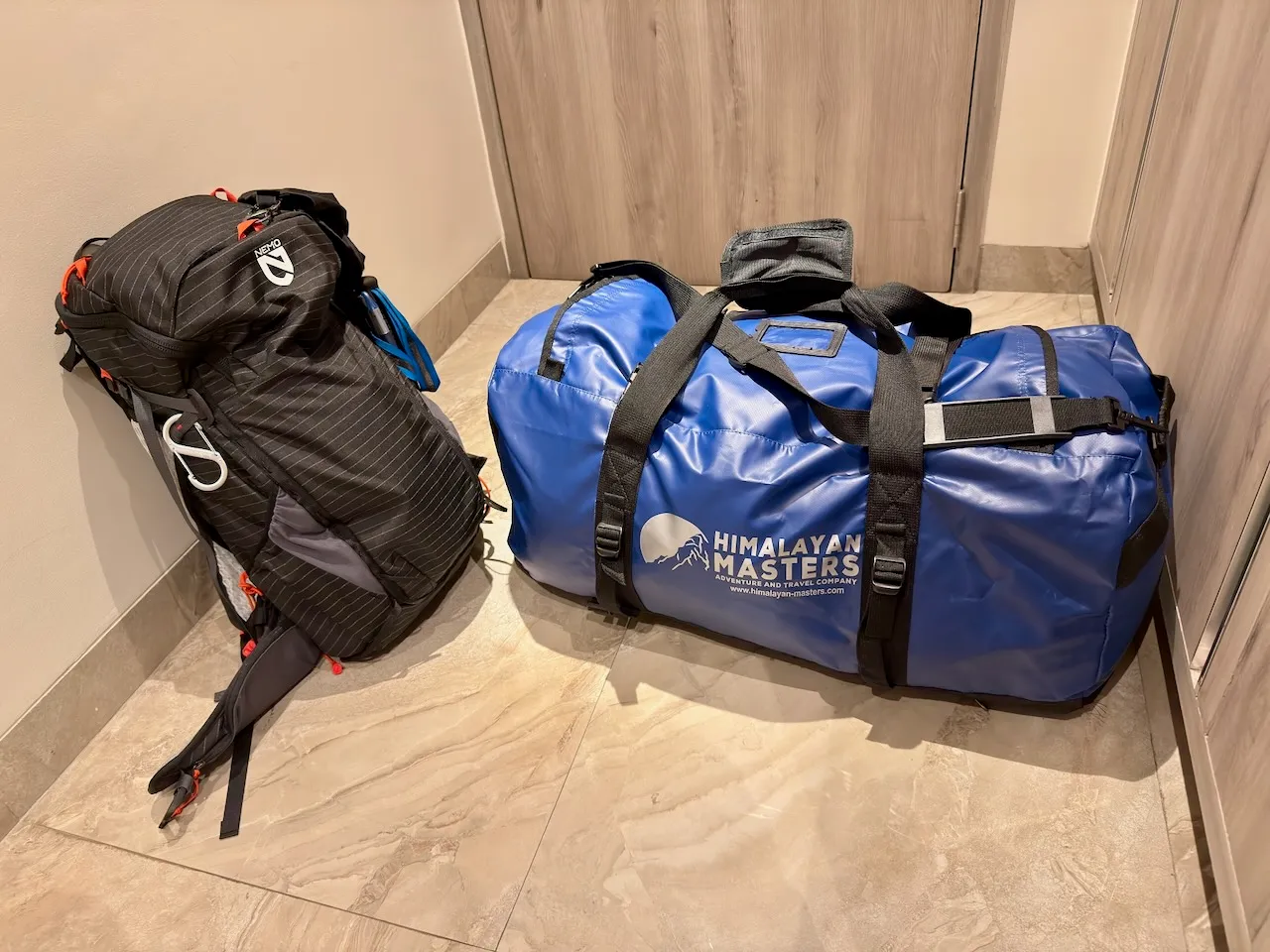
By evening I was fully packed, if slightly defeated. I caught up on some saved TV shows, ate more rice and dal for dinner, and since I never did get that nap, went to bed early. Tomorrow, the real journey begins at 7am.
One final note: the Croatian woman I’d met that morning—the one bound for Everest Base Camp—had her Lukla flight canceled again. It wasn’t her first time trekking here, so she took the setback with practiced calm, as though Kathmandu layovers were just part of the itinerary. I realized then that perhaps my bumpy nine-hour jeep ride was, in its own way, a blessing. At least gravity and bad weather can’t close the road entirely.